The Essentials
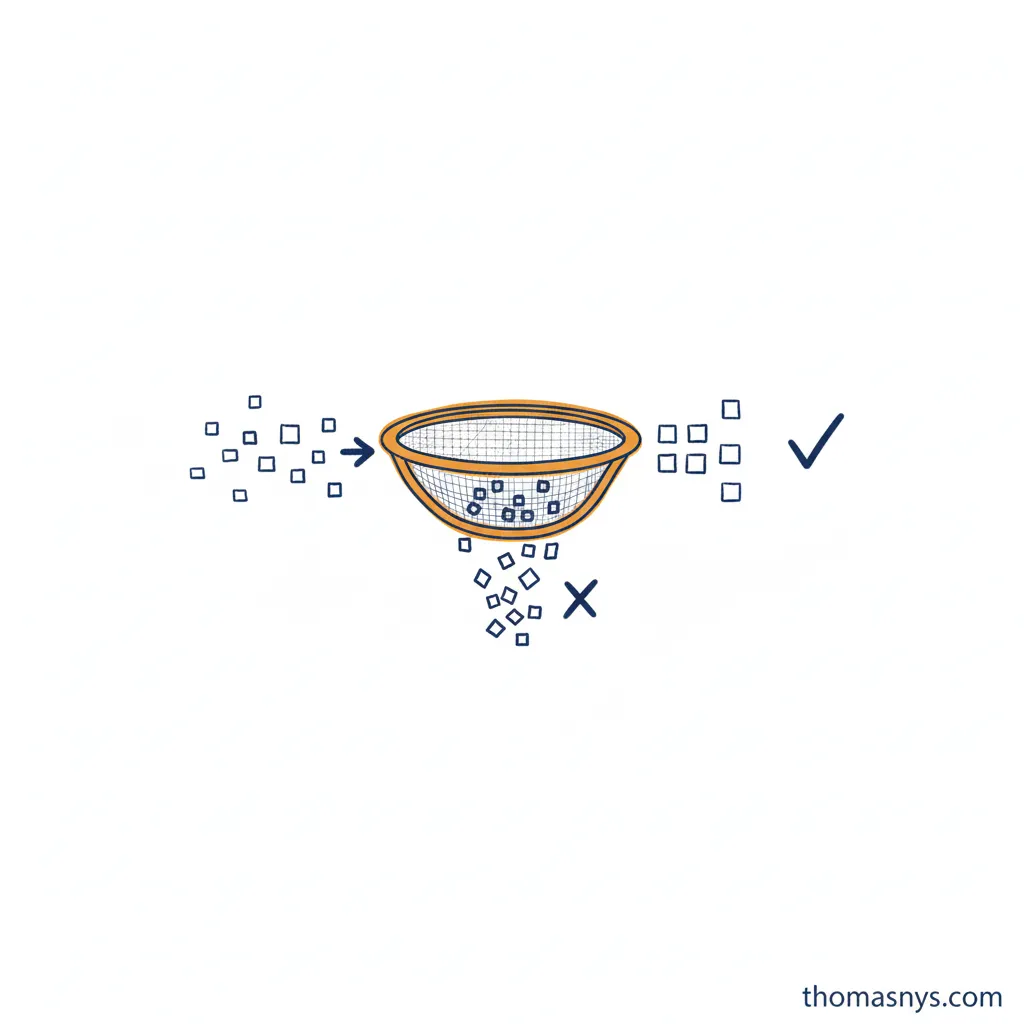
Data quality measures how well data serves its intended purpose. High-quality data is accurate, complete, consistent, timely, and trustworthy. Poor-quality data leads to bad decisions, wasted effort, and eroded trust.
Quality isn’t binary - data can be perfect for one use case and useless for another. A dataset with 95% accuracy might be fine for marketing analysis but unacceptable for financial reporting.
The goal isn’t perfect data. It’s data that’s good enough for how you’re using it, with visibility into its limitations.

The four core dimensions of data quality
Why Data Quality Matters
Decision Quality
Bad data leads to bad decisions. If your customer churn numbers are wrong, your retention strategy will be wrong. If revenue figures don’t reconcile, forecasts are unreliable. Garbage in, garbage out - at business scale.
Trust
Once stakeholders lose trust in data, they stop using it. They go back to gut feel, spreadsheets, and asking around. Rebuilding trust takes longer than building it initially.
Efficiency
Poor quality creates rework. Analysts spend time cleaning data instead of analyzing it. Engineers debug data issues instead of building features. Support handles complaints about incorrect reports.
Compliance
Regulations require accurate data. GDPR mandates accurate personal data. SOX requires reliable financial reporting. Healthcare regulations demand accurate patient records. Quality failures become compliance failures.
Cost
Bad data has direct costs: incorrect invoices, missed opportunities, regulatory fines. It has indirect costs too: time spent fixing problems, delayed projects, lost credibility.
Data Quality Dimensions
Accuracy
Does data reflect reality?
- Customer addresses that actually exist
- Order amounts that match what was charged
- Inventory counts that match physical stock
Accuracy is the most fundamental dimension. Inaccurate data is wrong data.
Completeness
Is all required data present?
- No missing values where data should exist
- All expected records captured
- Required fields populated
Completeness means having the data you need, not necessarily having all possible data.
Consistency
Does data agree across systems and over time?
- Same customer, same email address everywhere
- Totals that match their components
- Historical data that doesn’t change unexpectedly
Inconsistency creates confusion and undermines trust.
Timeliness
Is data available when needed?
- Real-time dashboards updated in real-time
- Daily reports available at start of business
- Alerts triggered before issues escalate
Stale data is often useless data.
Validity
Does data conform to defined formats and rules?
- Dates in expected formats
- Values within expected ranges
- References that point to existing records
Invalid data breaks downstream processing and analysis.
Uniqueness
Is each entity represented once?
- No duplicate customer records
- No repeated transactions
- Clear identity resolution
Duplicates inflate metrics and complicate analysis.
Measuring Data Quality
Quality Metrics
Quantify quality across dimensions:
Accuracy Rate = Correct records / Total records
Completeness Rate = Non-null values / Expected values
Consistency Rate = Matching records across systems / Total records
Timeliness = Time from event to data availability
Validity Rate = Valid records / Total records
Uniqueness Rate = Unique records / Total records
Quality Score
Combine metrics into an overall quality score:
Quality Score = (w1 × Accuracy + w2 × Completeness + w3 × Consistency + ...) / Total Weight
Weight dimensions based on importance for your use case. Financial data might weight accuracy heavily. Marketing data might prioritize completeness.
Quality SLAs
Define acceptable quality levels:
- “Customer email addresses must be 99% valid”
- “Daily revenue figures must be available by 6 AM”
- “Order data must match source systems within 0.1%”
SLAs make quality expectations explicit and measurable.
Common Quality Problems
Missing Data
Symptoms: Null values, empty fields, incomplete records
Causes:
- Optional fields not enforced at source
- Integration failures losing records
- Schema mismatches dropping columns
Solutions:
- Add not-null constraints where appropriate
- Monitor for completeness drops
- Validate record counts across systems
Duplicate Data
Symptoms: Inflated counts, multiple records for same entity
Causes:
- Multiple data sources without deduplication
- Retry logic creating duplicate inserts
- Lack of unique constraints
Solutions:
- Implement deduplication logic
- Use idempotent processing
- Add unique constraints and indexes
Inconsistent Data
Symptoms: Same entity with different values across systems
Causes:
- No master data management
- Unsynchronized updates
- Different business rules in different systems
Solutions:
- Establish single source of truth
- Implement data synchronization
- Document and reconcile business rules
Stale Data
Symptoms: Reports showing old information, delayed alerts
Causes:
- Pipeline delays or failures
- Batch processing too infrequent
- Bottlenecks in data flow
Solutions:
- Monitor data freshness
- Alert on pipeline delays
- Optimize or parallelize processing
Invalid Data
Symptoms: Processing failures, incorrect calculations
Causes:
- No input validation
- Schema evolution without handling
- Edge cases not anticipated
Solutions:
- Validate data at ingestion
- Handle schema changes gracefully
- Test with edge cases
Data Quality Strategy
Prevention
Stop quality problems before they happen:
- Source validation - Reject bad data at the entry point
- Schema enforcement - Define and enforce data contracts
- Input constraints - Limit what values are acceptable
Prevention is cheaper than remediation.
Detection
Find problems quickly when they occur:
- Automated testing - Run quality checks on every pipeline run
- Anomaly detection - Alert on unexpected patterns
- Monitoring dashboards - Visibility into quality metrics
Early detection limits damage.
Correction
Fix problems when found:
- Automated remediation - Fix known issues automatically
- Manual review workflows - Route exceptions to humans
- Backfill processes - Correct historical data when needed
Have a process before you need it.
Communication
Keep stakeholders informed:
- Quality reports - Regular visibility into data health
- Incident communication - Alert consumers to known issues
- Documentation - Clear understanding of data limitations
Transparency builds trust even when problems occur.
Quality Testing
Schema Tests
Verify data structure:
-- Column exists and has correct type
SELECT column_name, data_type
FROM information_schema.columns
WHERE table_name = 'orders'
Null Tests
Check for unexpected nulls:
-- No null values in required field
SELECT COUNT(*)
FROM orders
WHERE customer_id IS NULL
Uniqueness Tests
Verify no duplicates:
-- Primary key is unique
SELECT order_id, COUNT(*)
FROM orders
GROUP BY order_id
HAVING COUNT(*) > 1
Referential Integrity Tests
Check foreign key relationships:
-- All orders have valid customers
SELECT COUNT(*)
FROM orders o
LEFT JOIN customers c ON o.customer_id = c.customer_id
WHERE c.customer_id IS NULL
Range Tests
Verify values within bounds:
-- Order amounts are positive
SELECT COUNT(*)
FROM orders
WHERE total_amount <= 0
Freshness Tests
Check data is current:
-- Data updated within expected window
SELECT MAX(updated_at)
FROM orders
WHERE updated_at < CURRENT_TIMESTAMP - INTERVAL '1 hour'
Tools for Data Quality
dbt Tests
Built-in testing for dbt projects:
# schema.yml
models:
  - name: orders
    columns:
      - name: order_id
        tests:
          - unique
          - not_null
      - name: customer_id
        tests:
          - not_null
          - relationships:
              to: ref('customers')
              field: customer_id
      - name: total_amount
        tests:
          - not_null
          - dbt_utils.accepted_range:
              min_value: 0
Great Expectations
Python-based data validation:
import great_expectations as gx

context = gx.get_context()
validator = context.get_validator(
    batch_request=batch_request,
    expectation_suite_name="orders_suite"
)

validator.expect_column_values_to_not_be_null("customer_id")
validator.expect_column_values_to_be_between("total_amount", min_value=0)
validator.expect_column_values_to_be_unique("order_id")
Soda
SQL-based quality checks:
# checks.yml
checks for orders:
  - row_count > 0
  - missing_count(customer_id) = 0
  - duplicate_count(order_id) = 0
  - min(total_amount) >= 0
  - freshness(created_at) < 1h
Monte Carlo, Anomalo, Bigeye
Commercial data observability platforms that provide:
- Automated anomaly detection
- Quality monitoring dashboards
- Incident management
- Root cause analysis
Quality and Governance
Data quality is a core pillar of data governance:
- Ownership - Someone must be accountable for each dataset’s quality
- Standards - Define what “good quality” means for your organization
- Processes - How quality issues are identified and resolved
- Metrics - How quality is measured and reported
Quality without governance is reactive firefighting. Governance without quality metrics is paperwork.
Getting Started
1. Define Critical Data Elements
Not all data needs the same quality attention. Identify the data that matters most - what drives key decisions, what has compliance requirements, what powers customer-facing products.
2. Establish Baselines
Measure current quality before trying to improve it. You can’t demonstrate progress without knowing where you started.
3. Implement Basic Tests
Start with simple tests on critical data:
- Not null on required fields
- Unique constraints on identifiers
- Freshness on time-sensitive data
4. Create Visibility
Build a quality dashboard. Make quality metrics visible to data producers and consumers.
5. Assign Ownership
Every dataset needs an owner accountable for quality. Quality without ownership is everyone’s problem and no one’s priority.
Frequently Asked Questions
What is data quality?
Why is data quality important?
How do you measure data quality?
What tools help with data quality?
How do I improve data quality?
Related Reading
Data Foundations
- What Is Data Governance? - The framework quality operates within
- What Is Data Lineage? - Tracing quality issues to their source
- What Is Data Integration? - Where quality problems often originate
- What Is a Data Platform? - Building quality into your platform
- What Is Data Architecture? - Designing for quality
AI & ML
- AI & Data Architecture - Why AI projects fail without quality data
- What Is MLOps? - Data quality in ML operations
Related Topics
- Building Data Teams - Teams accountable for quality
- What Is Technical Debt? - How quality issues create debt
- The Data Contract Pattern - Agreements that enforce quality
- Data Quality as Organizational Signal - How quality issues reveal organizational dysfunction
- Data Quality Crisis: 77% Admit Failure - Why quality is everyone’s problem
- The Dashboard Nobody Trusted - What happens when quality erodes trust
Last updated: 10 April 2026