Your AI Initiative Is Blocked by Context, Not Tokens
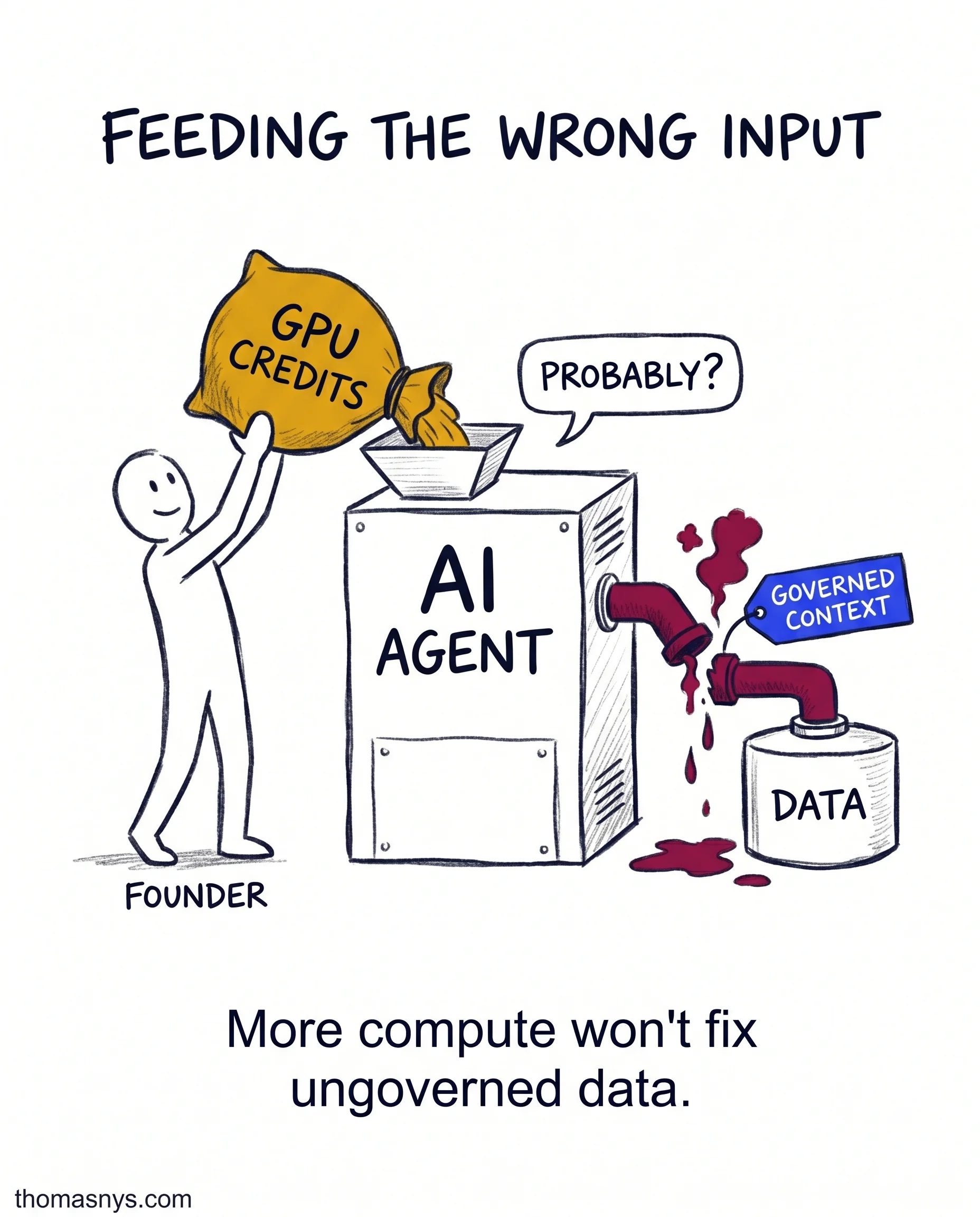
The team bought more tokens. The agent still gave confident, wrong answers. The bottleneck was never compute.
I keep seeing AI budgets pour into bigger models and more tokens while the thing actually blocking the agent sits upstream: it has no reliable way to know what your data means.
An agent answering a business question needs three things most stacks don’t have ready:
- A semantic layer. One governed definition of “active user,” “revenue,” “churn,” so the agent isn’t guessing which of four tables is the real one.
- Governance and access. What this agent is allowed to see, and a way to prove it later. Added after launch, this becomes the thing that stalls the rollout.
- A protocol for tools and context. Something like MCP, so the agent reaches data through a defined interface instead of a pile of bespoke glue.
That’s all data foundation work, the kind that’s been undervalued for a decade and now has a deadline attached, because the agent exposes every gap instantly. Compute doesn’t touch any of it.
The order that works: get definitions, governance, and access right first. Then the model has something trustworthy to reason over. Skip it and a bigger model gets to the wrong answer sooner. That’s all you bought.
Before the next compute invoice clears, find out what the agent reads from and whether a single person owns it.
Does your AI feature read from governed definitions, or from whichever table someone wired up first?
Fractional Data Architect helping startups and scaleups build data platforms that scale.
More about Thomas Nys →