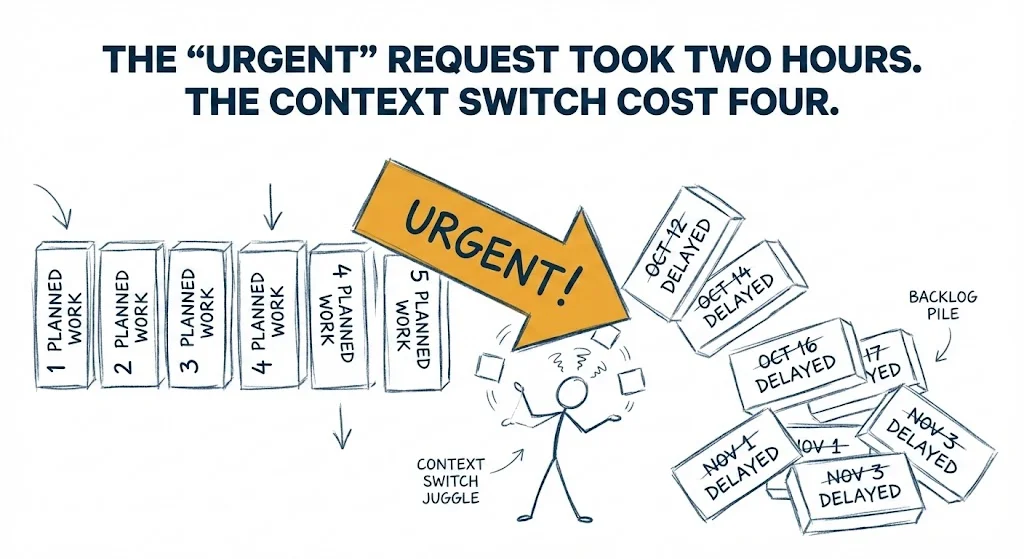
The “urgent” request took two hours. The context switch cost four.
The request takes two hours. The context switch takes four. The work that got displaced? Delayed a week.
Here’s what happens when someone needs data “by end of day”: The data engineer stops mid-task. Loses 30 minutes regaining context later. The pipeline fix they were working on waits. Another team’s request shifts right. The platform improvement that would prevent future fires? Postponed again.
One urgent request doesn’t cost two hours. It costs two hours plus everything it displaces.
Most organizations don’t see this. They see a responsive data team. They don’t see the invisible tax: half-finished work, growing backlogs, technical debt that compounds while everyone firefights.
The math is brutal. Three “urgent” requests per week at four hours each - half an engineer’s capacity. But the real cost is the twelve hours of context switching and the strategic work that never happens.
Queue-jumping feels free to the requester. The team absorbs the cost silently until they can’t anymore.
If every request is urgent, nothing gets finished. Start tracking: how much of your team’s week is planned work versus interrupts?
What percentage of your team’s capacity goes to unplanned requests?