The Three-Layer Rule For Small Teams
I’ve seen five-person data teams with six warehouse layers. Nobody could say which one finance reads.
Bronze, silver, gold, platinum, a staging area and a sandbox, each with its own naming convention.
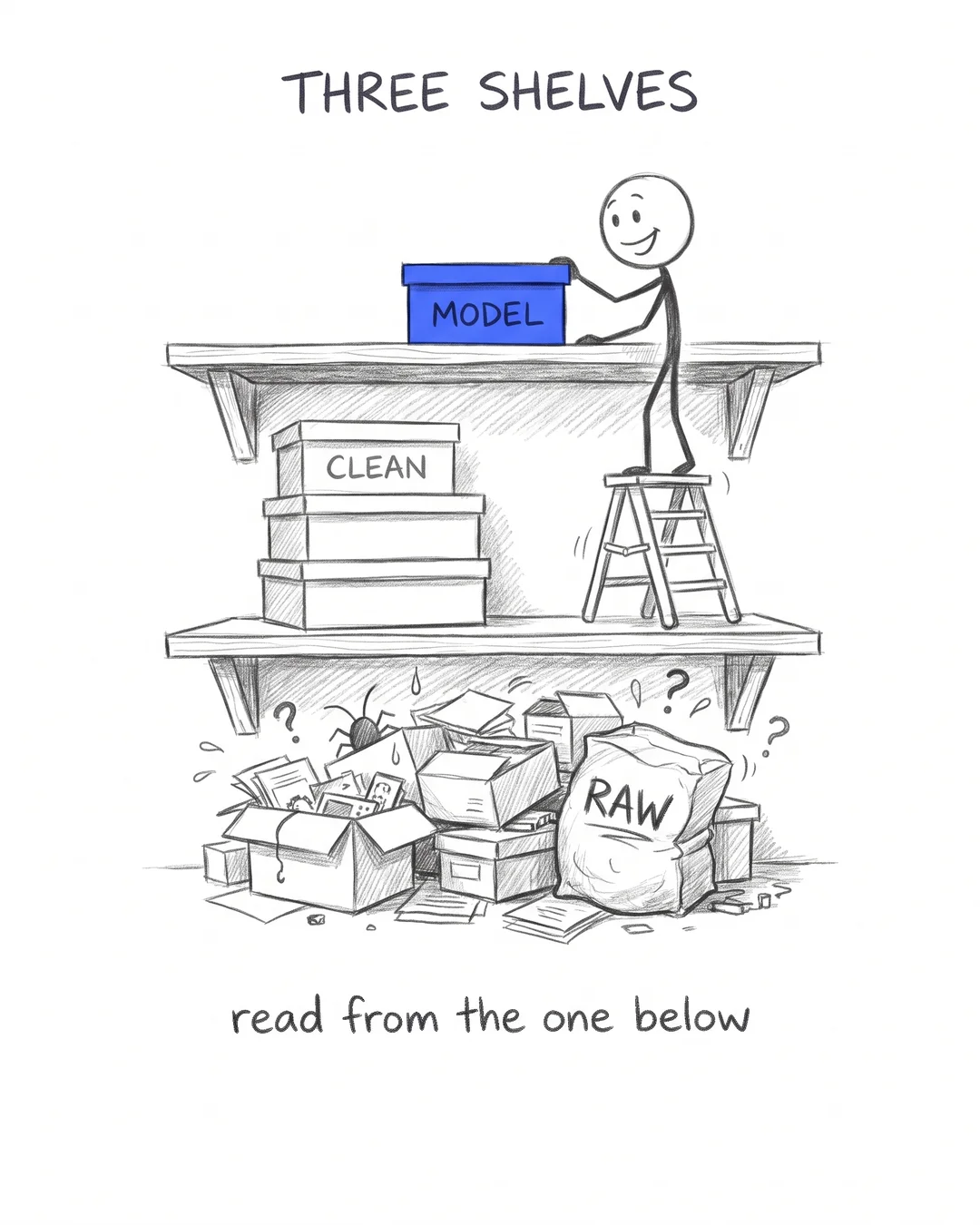
Three layers go a long way:
- Raw: exactly what the source sent, append-only, never edited. When something goes wrong, this is how you prove what happened.
- Clean: one model per source table. Types fixed, names standardized, duplicates handled. No business logic yet.
- Modeled: the tables people actually query. Customers, orders, revenue. The business rules live here, once.
I keep one rule: each layer only reads from the one below, and dashboards only read from modeled. No exceptions for “just this one report”, because that’s how the fourth layer starts.
I’ve kept this shape from 3 engineers to around 30 without a rewrite. The layers stayed three; what grew was how much sits in each.
Would it survive 300 people? Probably, with a few additions. I’ll find out when a client gets there.
How many layers does your warehouse have, and could you name what each one is for?
Fractional Data Architect helping startups and scaleups build data platforms that scale.
More about Thomas Nys →