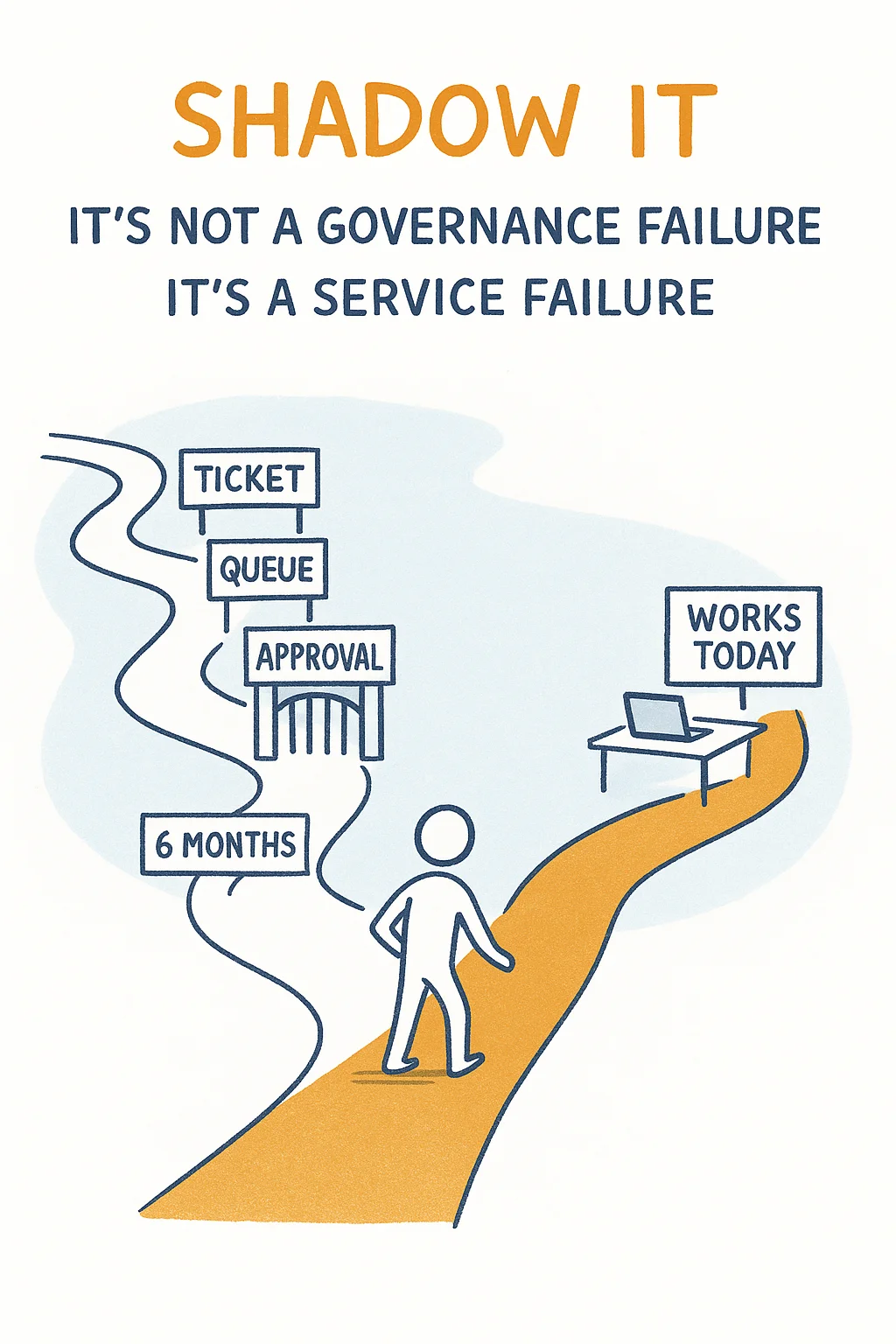
Shadow IT isn’t a governance failure. It’s a service failure.
When business teams build their own solutions outside IT, the instinct is to crack down. Enforce policies. Block tools. Mandate approval workflows.
This treats the symptom. The cause is simpler: they needed something, asked, and didn’t get it-or didn’t bother asking because they knew the answer.
Shadow IT is a feedback signal. Every spreadsheet running a business process is a requirement you missed. Every department-owned database is a data product you didn’t build. Every SaaS tool purchased on a corporate card is velocity your platform couldn’t provide.
The uncomfortable truth: shadow IT often works. It’s fast, it solves the immediate problem, and it doesn’t require a 6-month roadmap negotiation. That’s why people build it.
The cost comes later. Data silos. Security gaps. Integration nightmares. Tribal knowledge that leaves when the creator does.
The fix isn’t better governance. It’s faster service. Reduce the friction of working with IT until building around you becomes harder than working with you.
Shadow IT disappears when the official path is the path of least resistance.
What’s the oldest shadow solution still running in your organization?