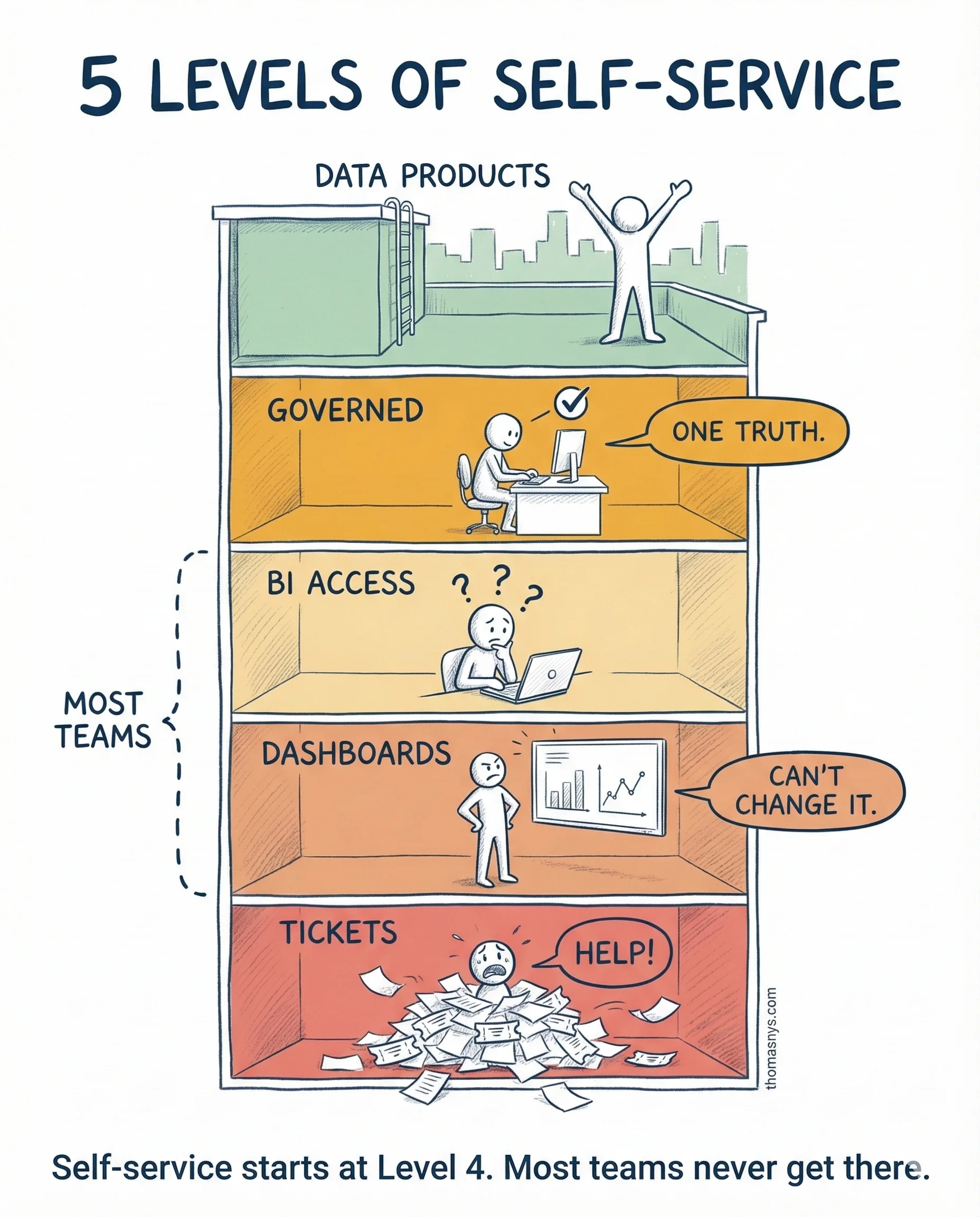
“Self-service analytics” at most companies means “we gave everyone PowerBI access and hoped for the best.”
There are actually 5 levels to this. And most teams are stuck somewhere between 2 and 3, wondering why it doesn’t feel like self-service yet.
Level 1: Ticket queue. Every request goes through the data team. Bottleneck by design.
Level 2: Pre-built dashboards. Business users can look, but can’t explore. Better, but still limited.
Level 3: BI tool access with docs. Users can query, but definitions aren’t governed. Three people calculate “revenue” three different ways.
Level 4: Semantic layer with governed metrics. One definition of revenue. Users explore within guardrails. This is where real self-service starts.
Level 5: Data products with APIs. Full access, programmatic consumption, governed at the source. Few companies need this immediately.
The jump from Level 3 to Level 4 is where most teams stall. It requires a semantic layer - a shared definition layer that sits between your warehouse and your BI tools. Without it, “self-service” just means “everyone builds their own version of the truth.”
What percentage of analytics requests can your business users handle without filing a ticket?