The Fragile Organic Platform Fix
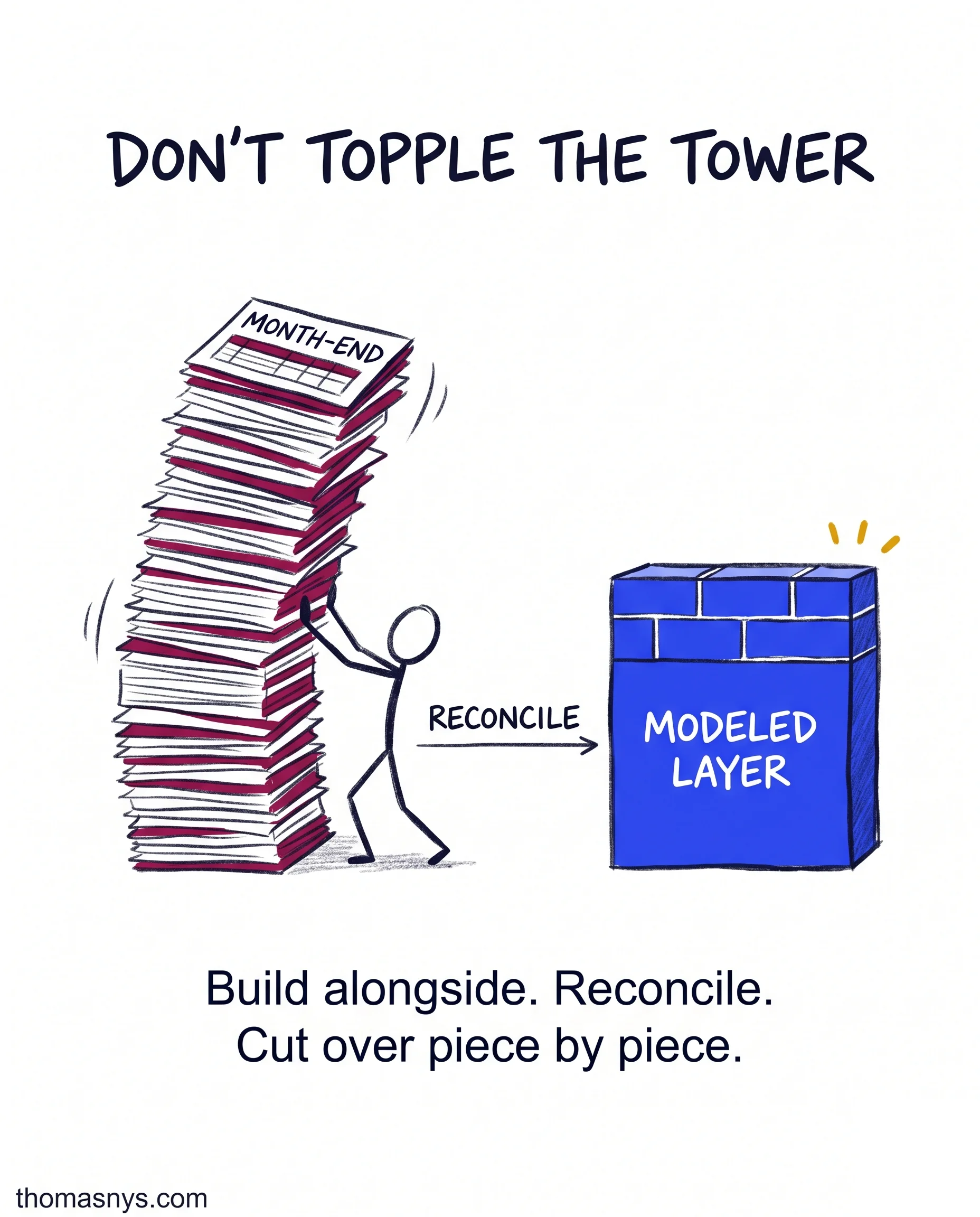
An e-commerce client’s reporting ran on a spreadsheet one person updated by hand every morning. It broke every quarter, always at month-end.
It started reasonable. One founder, one spreadsheet, real numbers. Then the company grew. More products, more channels, more people pulling from the same fragile sheet. By the time I came in, the “platform” was a chain of linked workbooks and a nightly export nobody fully understood.
The instinct in the room was a full rebuild. Stop the world, build the real warehouse, migrate everything. For a business that closes month-end on those numbers, stopping the world wasn’t on the table.
What we did instead, over about six weeks:
- Built the new modeled layer alongside the spreadsheet, reading from the same sources.
- Reconciled the two daily until the new numbers matched the old ones, line for line, for a full month.
- Cut over one report at a time, starting with the least risky, keeping the spreadsheet as a fallback until each was proven.
- Only then retired the manual morning step.
No downtime. No month-end missed. The person who’d owned the morning update got their mornings back and moved onto work that actually needed a human.
The lesson I keep relearning: you rarely have to choose between fragile-but-working and a risky big-bang rebuild. Run the new system in parallel, reconcile against the old one until you trust it, then cut over piece by piece.
What’s the one hand-updated file your month-end still secretly depends on?
Fractional Data Architect helping startups and scaleups build data platforms that scale.
More about Thomas Nys →