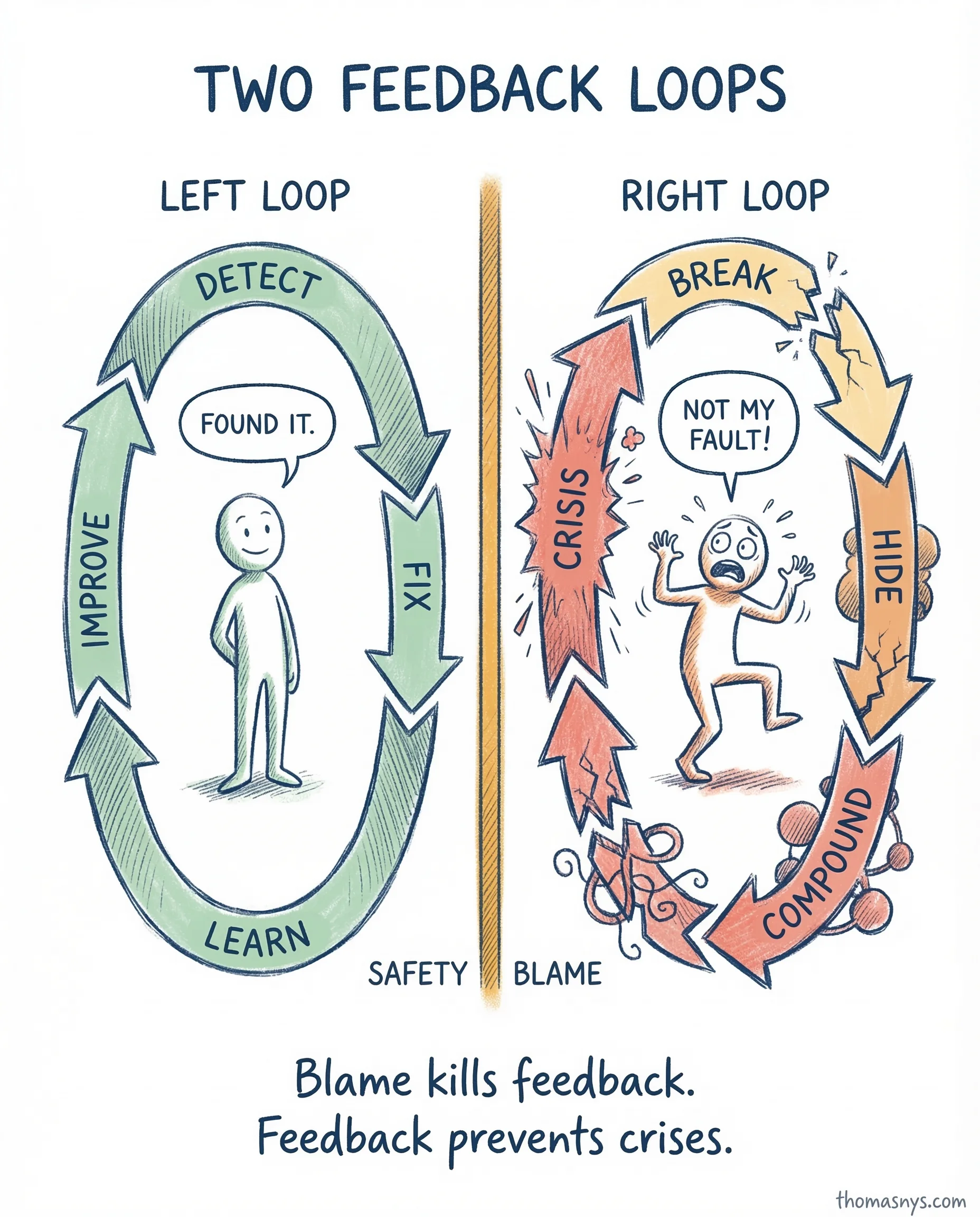
Your data team hides problems because they’ll get blamed for them. The Unicorn Project calls this the downward spiral. Here’s how to break it.
The Phoenix Project’s Second Way is about amplifying feedback loops. In software, this became monitoring, alerting, and fast rollbacks. Standard practice by now. In data? Most teams are still where software was in 2010 - they know if a pipeline ran, but not if the output is correct.
The gap is even deeper than tooling. The Unicorn Project adds the missing piece: psychological safety. When a data incident happens, who gets blamed? Usually the person who ran the query, not the system that allowed bad data through. When teams fear blame, they hide problems. Hidden problems compound.
Good feedback in data looks like this: automated quality checks at the source, not the dashboard. Data SLAs with breach alerts. Blameless post-mortems within 48 hours. Consumer satisfaction tracking.
The test is simple: how long between “data breaks” and “someone notices”? If it’s more than an hour, your feedback loop is broken. If people hide issues instead of flagging them, the loop doesn’t exist at all.
How long between data breaking and someone noticing on your team?