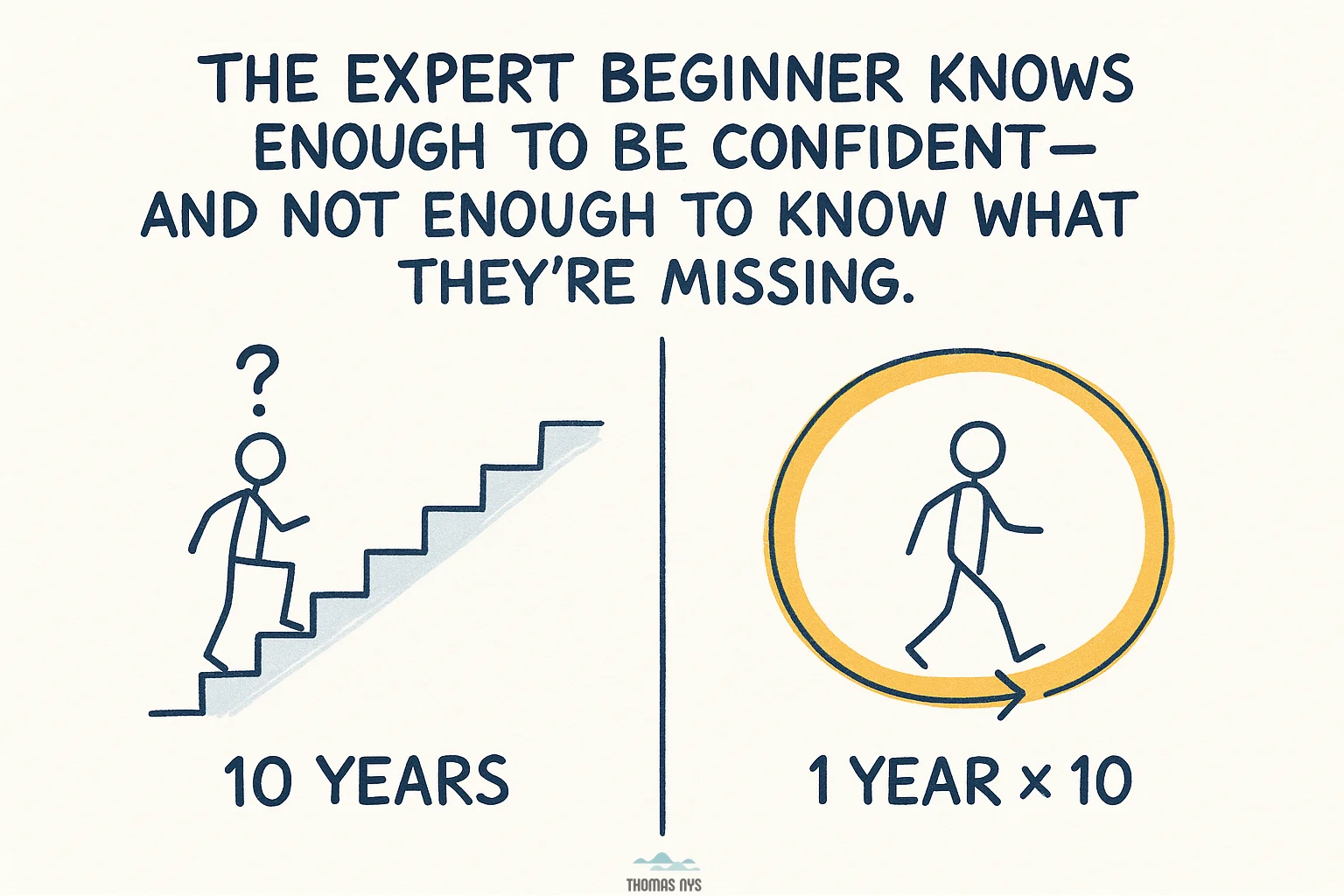
The expert beginner knows enough to be confident and not enough to know what they’re missing.
The expert beginner knows enough to be dangerous. They’ve solved the same problems the same way for years. They have strong opinions-and stopped questioning them long ago.
The pattern: early success creates confidence. Confidence reduces curiosity. Reduced curiosity stops growth. But the title keeps advancing.
Expert beginners don’t know what they don’t know. And they have enough authority to make it everyone else’s problem.
They shoot down new approaches because “we tried that in 2015.” They over-engineer solutions because complexity feels like competence. They block architectural evolution because the current system is “fine,” it’s the system they built.
The dangerous part: they interview well. They sound authoritative. They have war stories. But their mental models are frozen at whatever worked five years ago.
True expertise isn’t knowing the answer. It’s recognizing when the question has shifted.
The fix isn’t about firing senior engineers. It’s about creating a culture where admitting mistakes feels safer than remaining stagnant.
What idea got shot down because “we tried that before” but circumstances have changed?