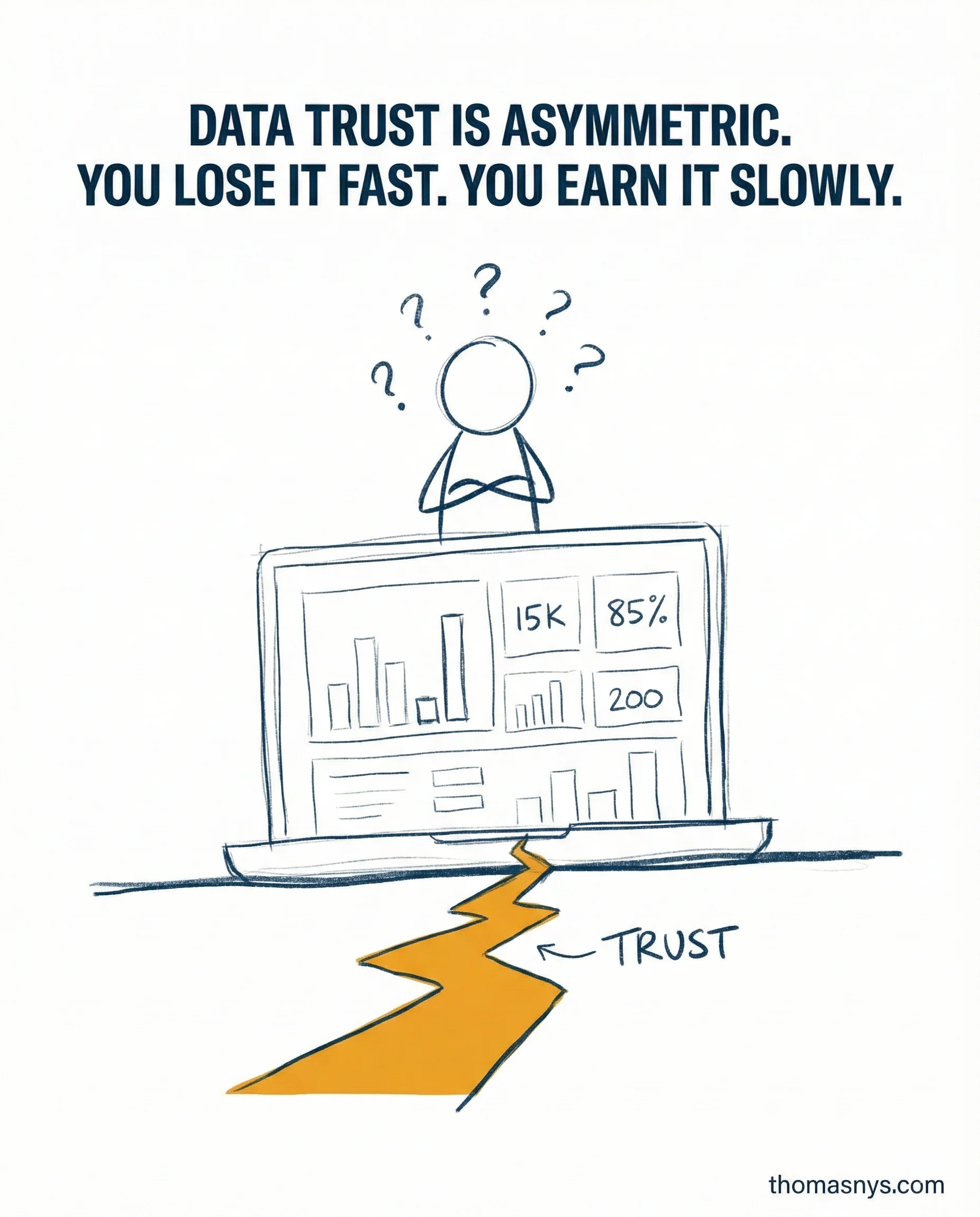
Data trust is asymmetric. You lose it fast. You earn it slowly.
According to Deloitte, 67% of executives say they’re not comfortable accessing or using data from their analytics systems. Even in companies with strong data cultures, 37% still express discomfort.
This creates a strange reality.
Companies invest millions in data infrastructure. They build dashboards. They hire analysts. Then decision-makers ignore the outputs and trust their gut instead.
KPMG found that 67% of CEOs prefer intuition over data-driven insights. Not because they’re anti-data. Because they’ve been burned by unreliable numbers before.
The trust gap has real causes: broken dashboards, siloed departments, alert fatigue, metrics that don’t match reality. Great Expectations found that 77% of organizations have data quality issues, and 91% say it impacts company performance.
Trust isn’t rebuilt with better tools. It’s rebuilt with consistency. Every time a number is wrong, trust drops. Every time a number is right, trust barely moves.
One thing that works: pick your five most-used metrics. Run automated checks on them daily. When something breaks, fix it before anyone asks. Do this for three months. That’s how trust compounds.
When did someone last question a number in your reporting?