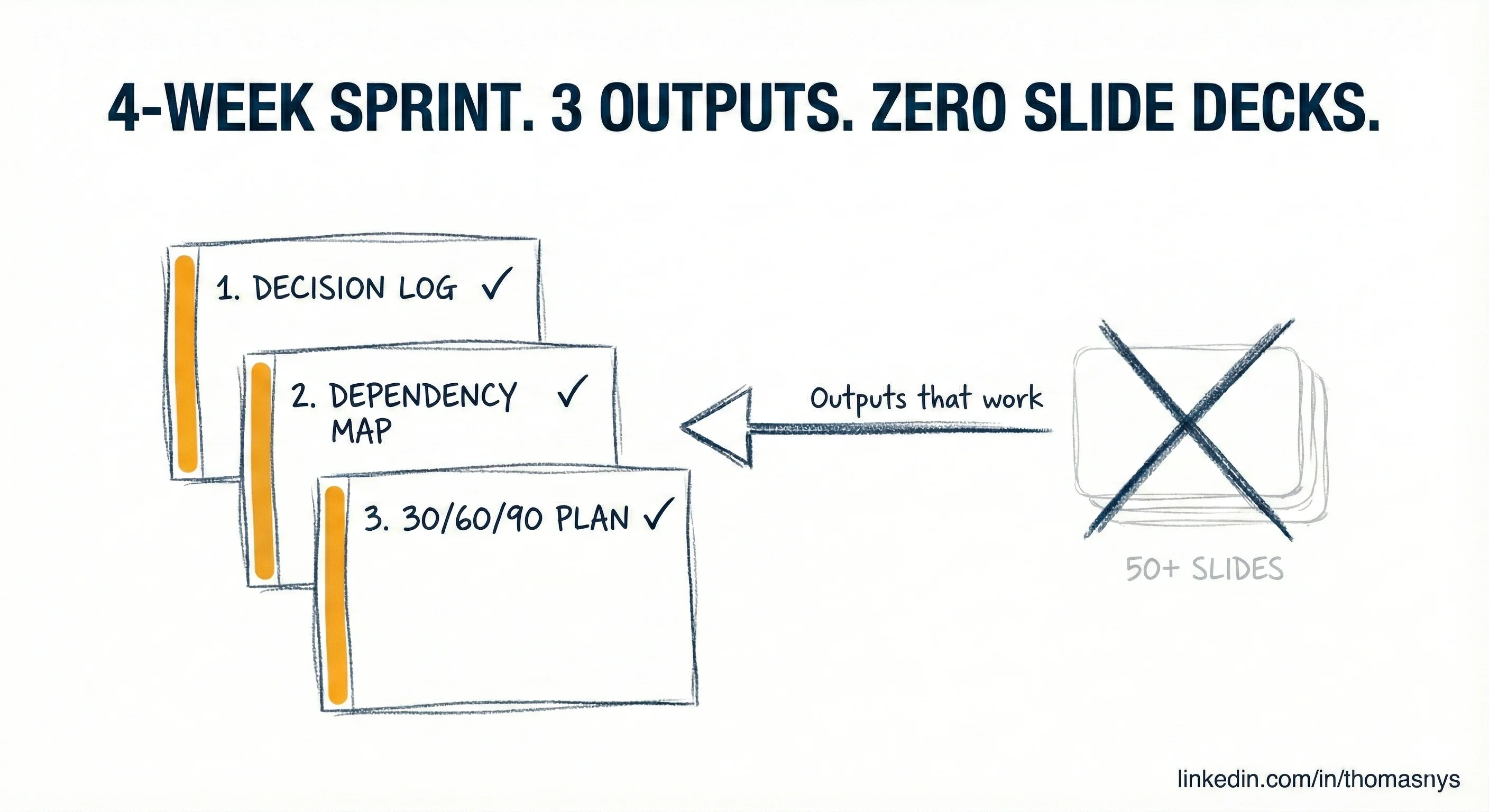
A 4-week sprint. 3 outputs. Zero slide decks nobody reads.
When I run a Team Alignment Sprint, we don’t build a strategy deck. We make three things teams actually use:
1. A decision log.
Who owns what decisions? How conflicts escalate. Where authority lives. One page, updated weekly. No more “I thought you were handling that.”
2. A dependency map.
Not a technical architecture diagram, but a communication map. Which teams need to talk before which changes? Where handoffs break. Updated monthly.
3. A 30/60/90 plan with owners.
Not “improve data quality.” Specific outcomes with names attached. “Reduce pipeline failures by 40% in 60 days. Owner: Maria.” Reviewed biweekly.
Research shows 68% of digital projects fail because departments don’t align priorities. The cost? Up to 25% of annual revenue is lost to coordination friction.
Most alignment efforts fail because they aim for buy-in instead of accountability. Everyone in the room agrees, and nobody changes their behavior afterward.
These three outputs work because they’re working documents, not artifacts. They evolve. They have owners. They get reviewed.
Alignment isn’t about agreement. It’s about clarity on who decides what.
When was your last “alignment” effort and is it still being used?