Software Modernization Is Not Architectural Modernization
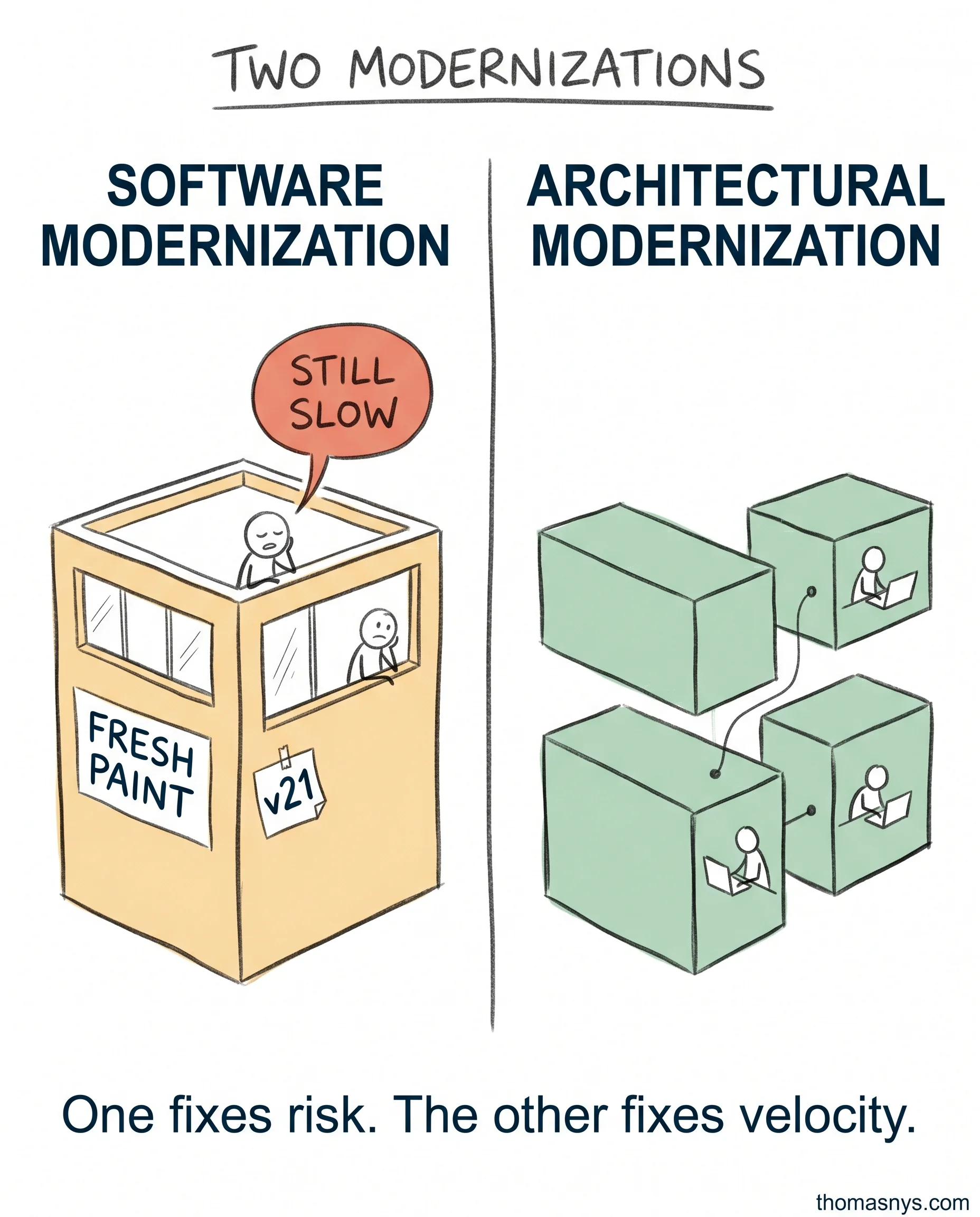
Software modernization and architectural modernization are different problems with different fixes.
I keep seeing CTOs frame their tech debt initiative as “modernization” and then scope it as a software upgrade. New language version, new framework, fresh dependencies. Six months and a chunky engineering bill later, deploys still take a week and the team still ships at the same pace.
These are two different problems:
Software modernization is replacing aging components. Java 8 to Java 21. Python 2 to Python 3. dbt 1.4 to dbt 1.9. Necessary work. Solves security exposure, hiring difficulty, library compatibility. Doesn’t change how fast you ship.
Architectural modernization is changing how the system is structured. Splitting a 200-table monolithic warehouse into domain-aligned datasets. Replacing a 4-hour batch with event-driven ingestion. Decoupling so two teams can deploy independently. This is what changes velocity.
You can do the first without the second. Most teams do, then wonder why nothing got faster.
The diagnostic question I use: if every dependency in your codebase magically jumped to the latest version overnight, would your team ship meaningfully faster the next month? If the honest answer is “no,” your problem is structural.
The trap with this confusion is funding. Boards approve “modernization” because the word sounds responsible. The team scopes it as the easier work (upgrades) because that’s tractable. The structural work, which is harder to scope and politically thorny, gets deferred. Eighteen months later, same conversation.
Be specific about which one you’re doing. Both are valid. They’re not interchangeable.
Which modernization did your last initiative actually do?
Fractional Data Architect helping startups and scaleups build data platforms that scale.
More about Thomas Nys →