Snowflake Credits Vs Databricks DBUs
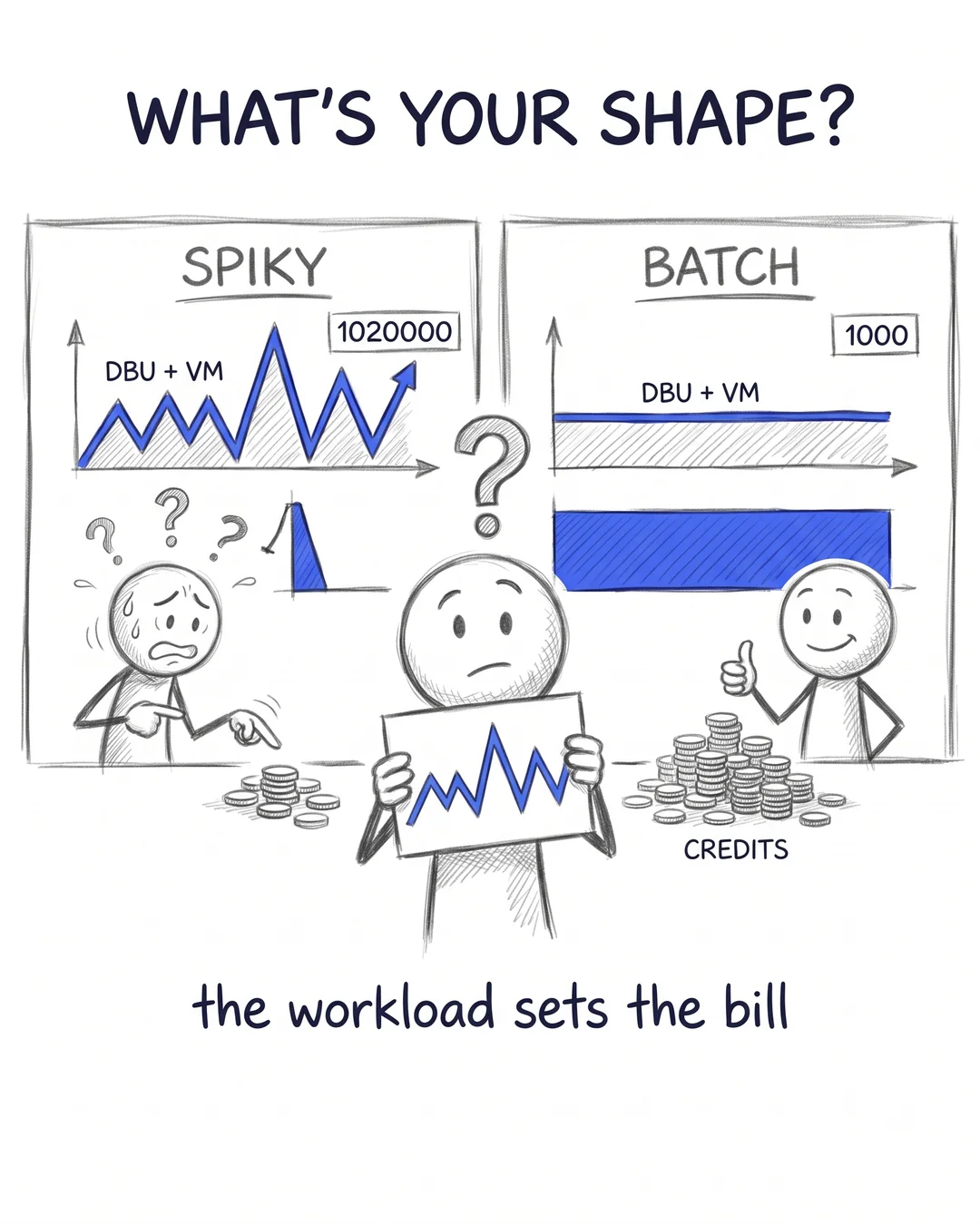
Your workload shape decides your Snowflake or Databricks bill far more than the rate card does.
The units measure different things. A Snowflake credit pays for warehouse compute, billed per second while it runs, with a one-minute minimum every time it resumes. On Databricks classic compute you pay DBUs to Databricks and the virtual machines separately to your cloud provider. Serverless bundles the two.
So comparing rate cards tells you very little.
Roughly how it plays out, in my experience:
- Lots of short, spiky BI queries through the day: Snowflake tends to suit that, as long as warehouses are sized small and auto-suspend quickly.
- Long batch jobs, heavy Spark transformations, ML: Databricks job clusters are often cheaper per job.
- A mix: either works, and the difference is usually smaller than the waste in whichever one you pick.
I’ve seen bigger savings from fixing auto-suspend settings and killing idle clusters than a platform switch would have delivered.
For a real comparison, run your three heaviest workloads on both for two weeks and compare the invoices.
Which of those workload shapes does your team mostly run?
Fractional Data Architect helping startups and scaleups build data platforms that scale.
More about Thomas Nys →