Series A To B Stack Pivot
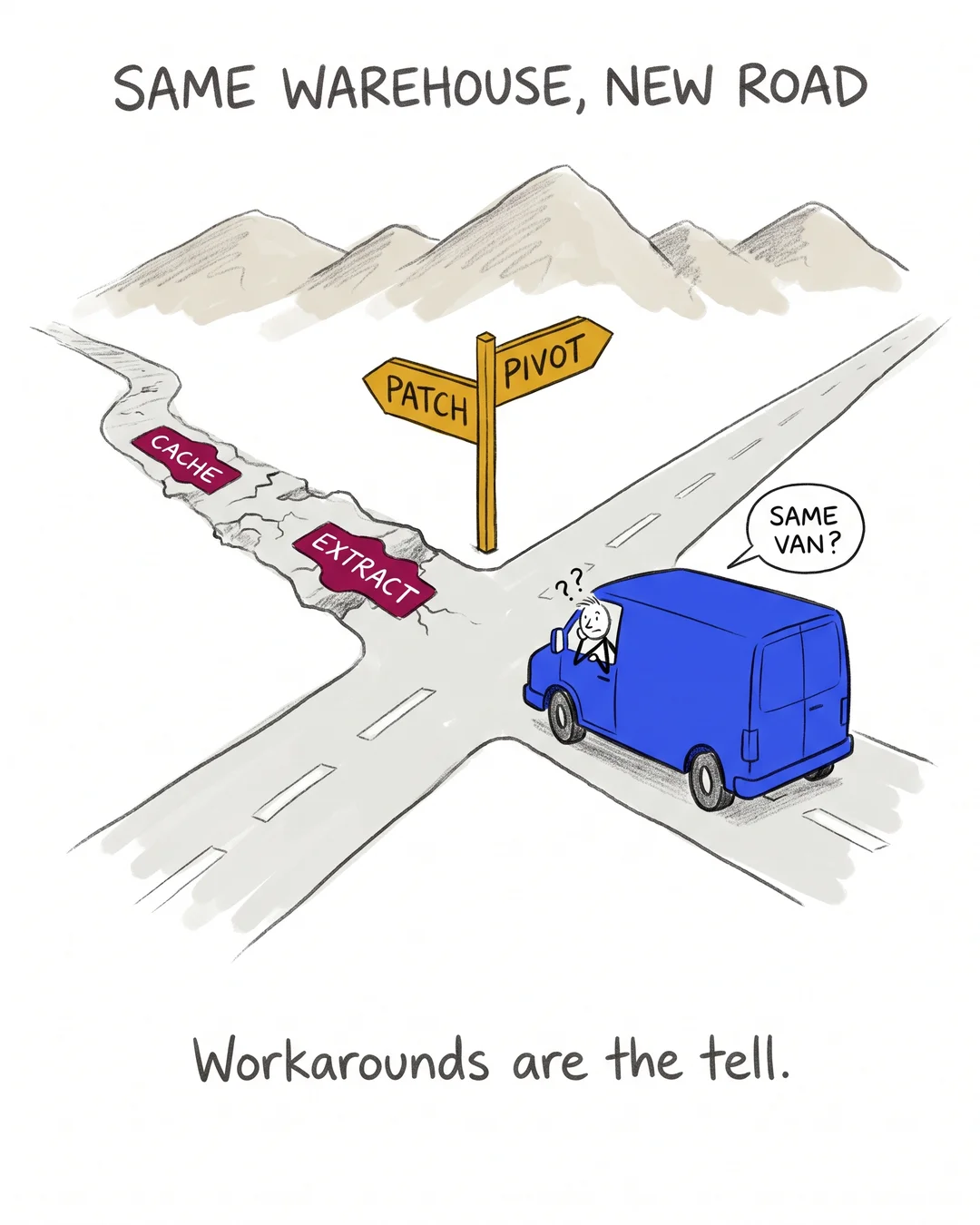
The warehouse that carried you to Series A can quietly become the wrong one by Series B.
The original choice was usually right at the time: a warehouse picked for internal dashboards, a handful of analysts, batch loads overnight.
Then the company grows and the query patterns shift underneath it. Customer-facing analytics with concurrency in the hundreds. ML features that want raw history. Costs that scale with the exact thing you now do most.
The decision tree I use in platform reviews has three questions:
- Did the dominant query pattern change since you chose it? BI-only then, embedded analytics now?
- Does the bill scale with your growth metric? If every new customer raises costs faster than revenue, the pricing model fights you.
- Can the current setup serve the next stage with configuration, or only with workarounds?
Workarounds are the tell. Caching layers, read replicas, extracts to Postgres: each one is the warehouse telling you the pattern moved.
One client pivoted right after Series A. Six weeks, clean cut. The same move at Series C tends to run a year, because by then 40 downstream consumers vote.
What’s the oldest workaround between your warehouse and your actual query pattern?
Fractional Data Architect helping startups and scaleups build data platforms that scale.
More about Thomas Nys →