Rust Is Quietly Becoming the Language of Data Infra
The fastest tools in your data stack are written in a language nobody on your team writes.
Polars was built in Rust. So was delta-rs, and uv, the package manager a lot of Python teams picked up this year. Your team stays a Python team: these tools hand out Python interfaces, though adopting one is still a migration, not a free upgrade.
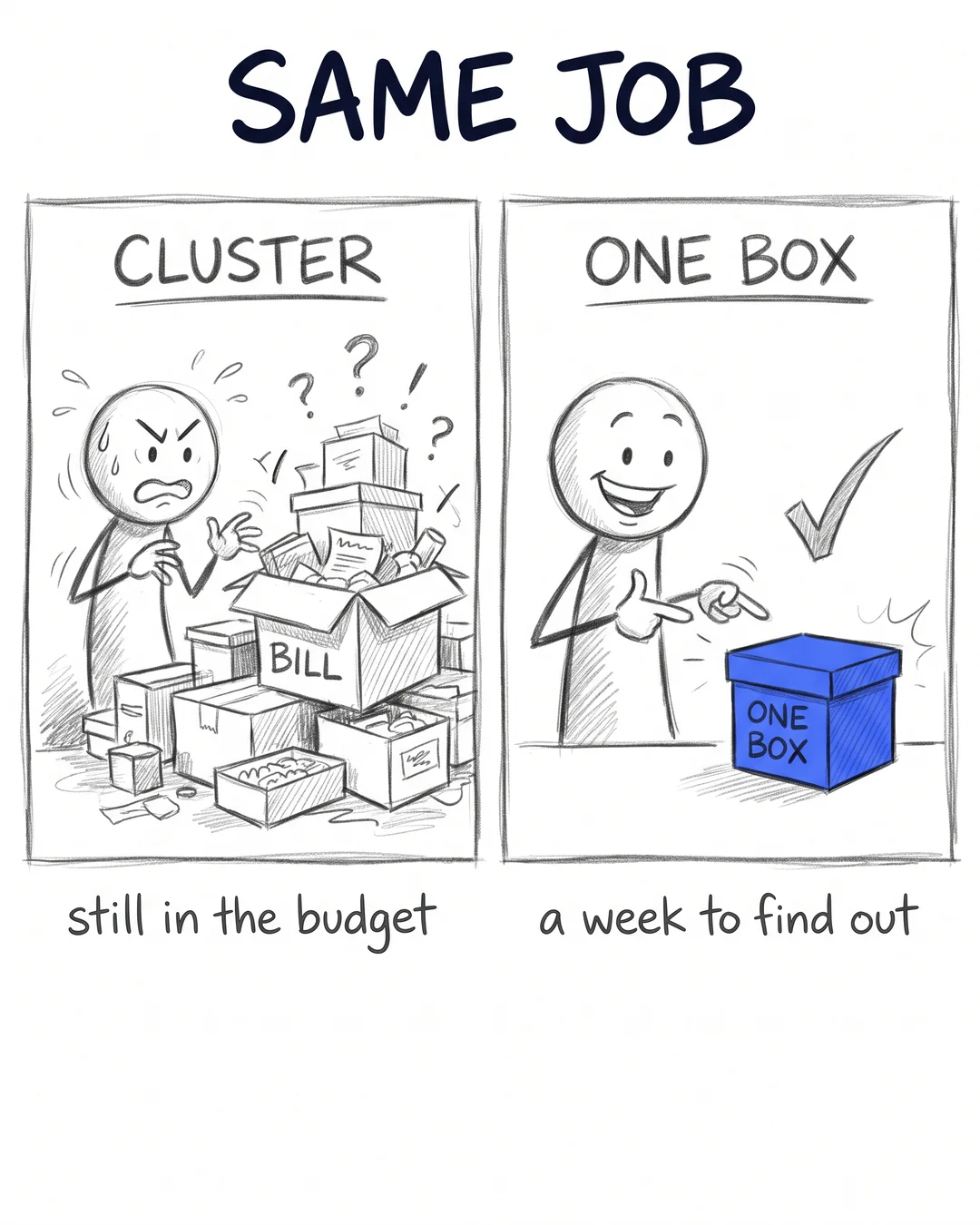
The consequence is a budget one. One large machine now handles work that got handed to a cluster by default a few years ago, and a cluster is a monthly bill, an on-call rota and another thing to keep patched.
So before you sign off the cluster line in next year’s budget, have someone run your most expensive job on a single machine and measure it. A week of someone’s time, against a year of the bill.
It doesn’t hold for everything. Large volumes, a lot of concurrent users, or jobs that need distributed compute for good reasons stay where they are. Someone also has to know how to size a machine, which is a skill plenty of teams lost while the cluster did it for them.
That test needs no Rust from anyone. The tools expose Python and a command line, which is the whole point of where the language sits.
What’s in your stack because it was the sensible default three years ago?
Fractional Data Architect helping startups and scaleups build data platforms that scale.
More about Thomas Nys →