Risk Sharing In Data Failures
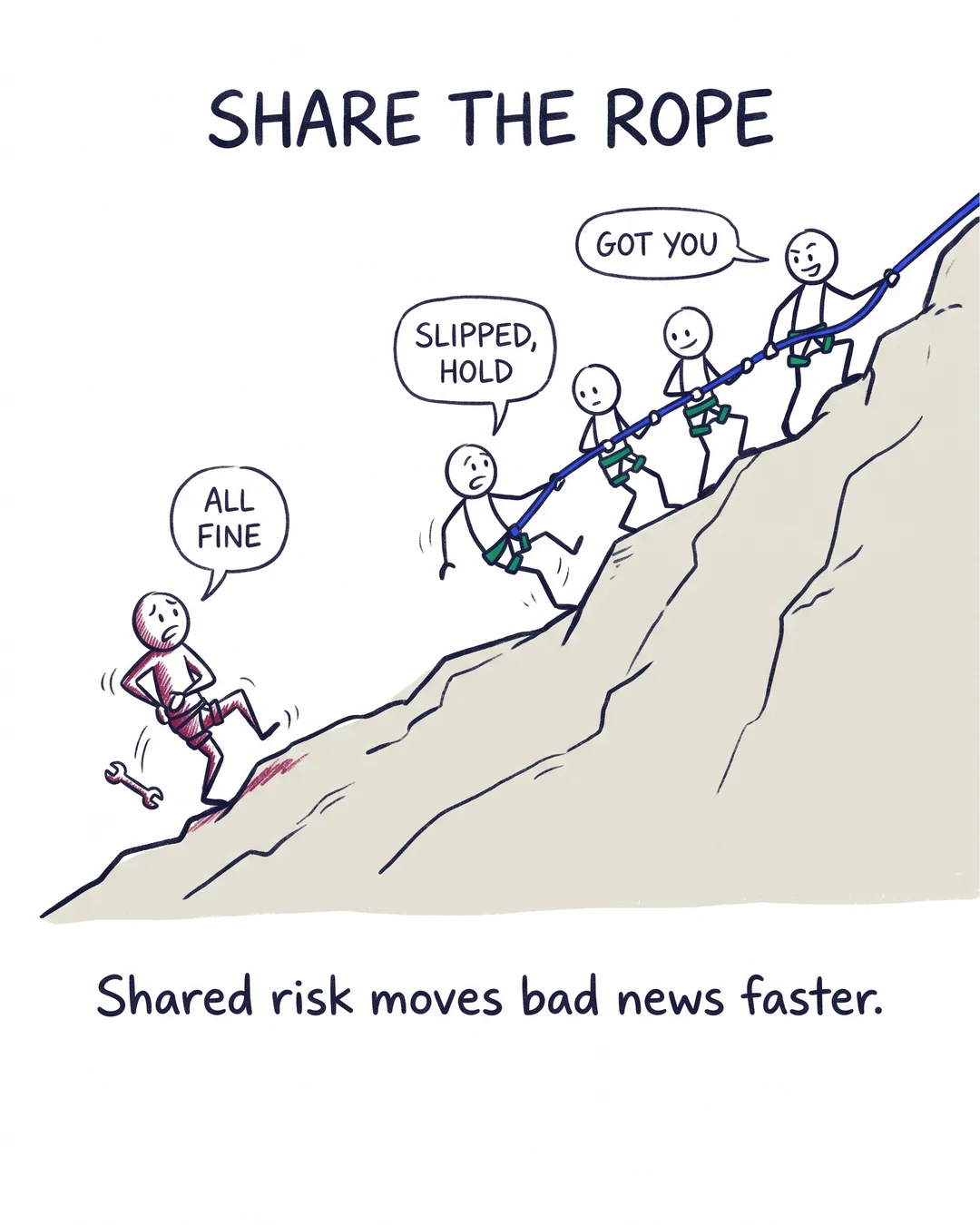
On one team, engineers reported their own near-misses weekly. Incidents dropped within a quarter.
“Who did this?” and “what let this happen?” produce different companies over time.
Westrum’s research named it decades ago: in generative cultures, risks are shared. Failure is treated as a property of the system, and information flows toward whoever can act on it. In pathological ones, failure is a personal event, so bad news learns to hide.
Data teams feel this harder than most, because their failures are public. A broken dashboard is on a screen in the board meeting; nobody has to file a bug report.
What sharing the risk looks like in practice:
- Postmortems that name causes, never people, and get read outside the team.
- On-call rotations that include the seniors who designed the system.
- Near-misses reported without ceremony, because those are free lessons.
- The person who surfaces a data error gets thanked in public, every time.
Every item on that list is free. The hard part: the most senior person in the room going first with their own mistake.
What was the first question asked after your last data incident?
Fractional Data Architect helping startups and scaleups build data platforms that scale.
More about Thomas Nys →