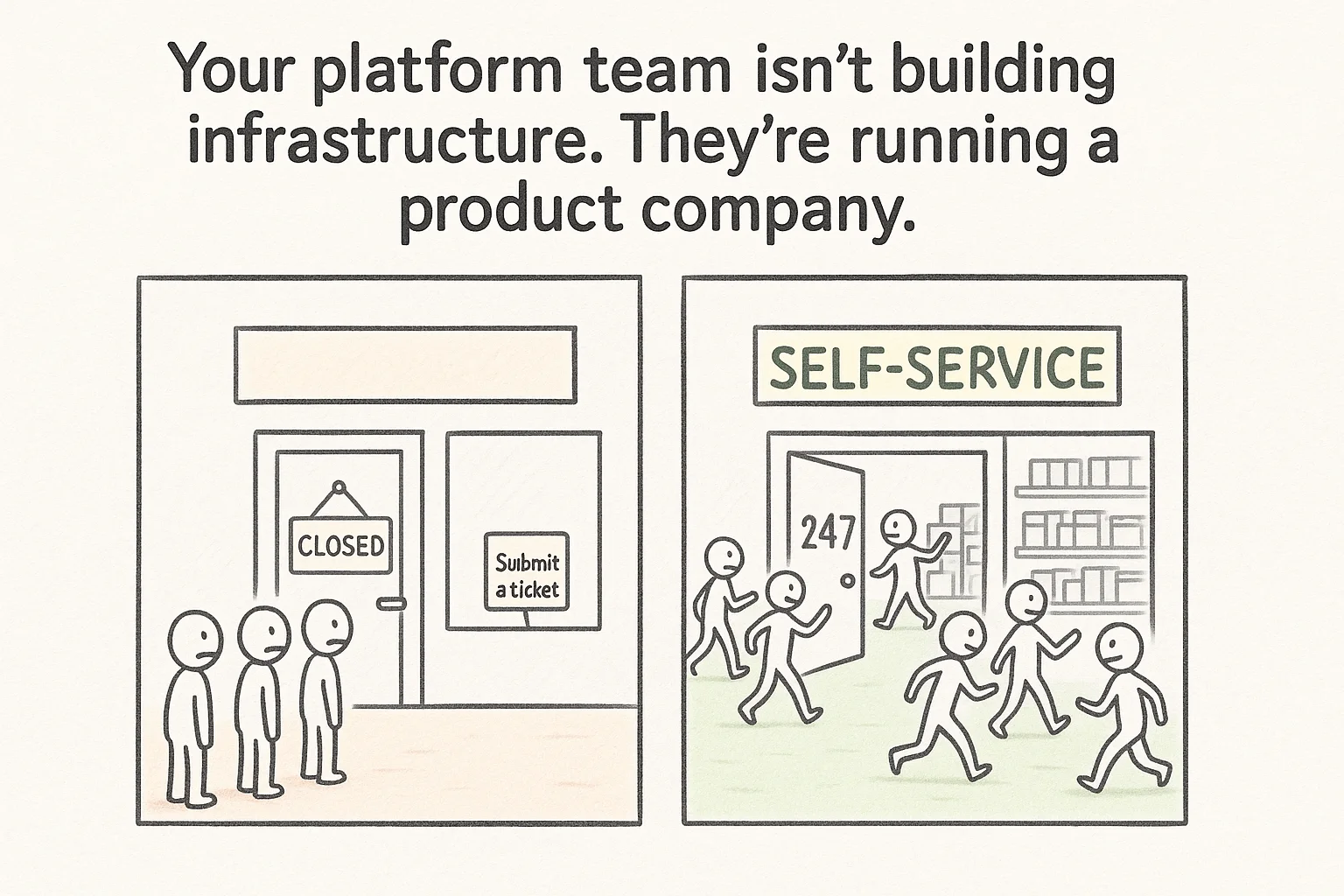
Your platform team believes they’re building infrastructure, but they’re actually running a product company with just one customer segment: your engineering org.
If your platform were an external SaaS product, would teams buy it? Would they renew?
This isn’t a thought experiment. It’s the only honest evaluation framework.
When teams create workarounds instead of using your platform, they are churning. When they submit tickets instead of self-serving, that’s friction pushing them toward competitors. When they wait three sprints for your roadmap to unblock them, they’re deciding if the relationship is worth continuing.
Treat it like the business problem it is.
SaaS companies focus heavily on onboarding because first impressions influence adoption. They track time-to-value since friction reduces retention. They prioritize documentation because support tickets cannot scale.
Your platform team should do the same.
This means:
- Measuring adoption and time-to-first-deploy, not just availability
- Treating documentation as a first-class product deliverable
- Building opinionated golden paths that eliminate decision fatigue
- Investing in developer experience like your retention depends on it-because it does
Your platform’s value isn’t what it can do. It’s whether teams choose to use it when they don’t have to.
How do you measure whether your platform is actually enabling autonomy or just centralizing dependencies under a different org chart?