Ownership Vacuum Patterns
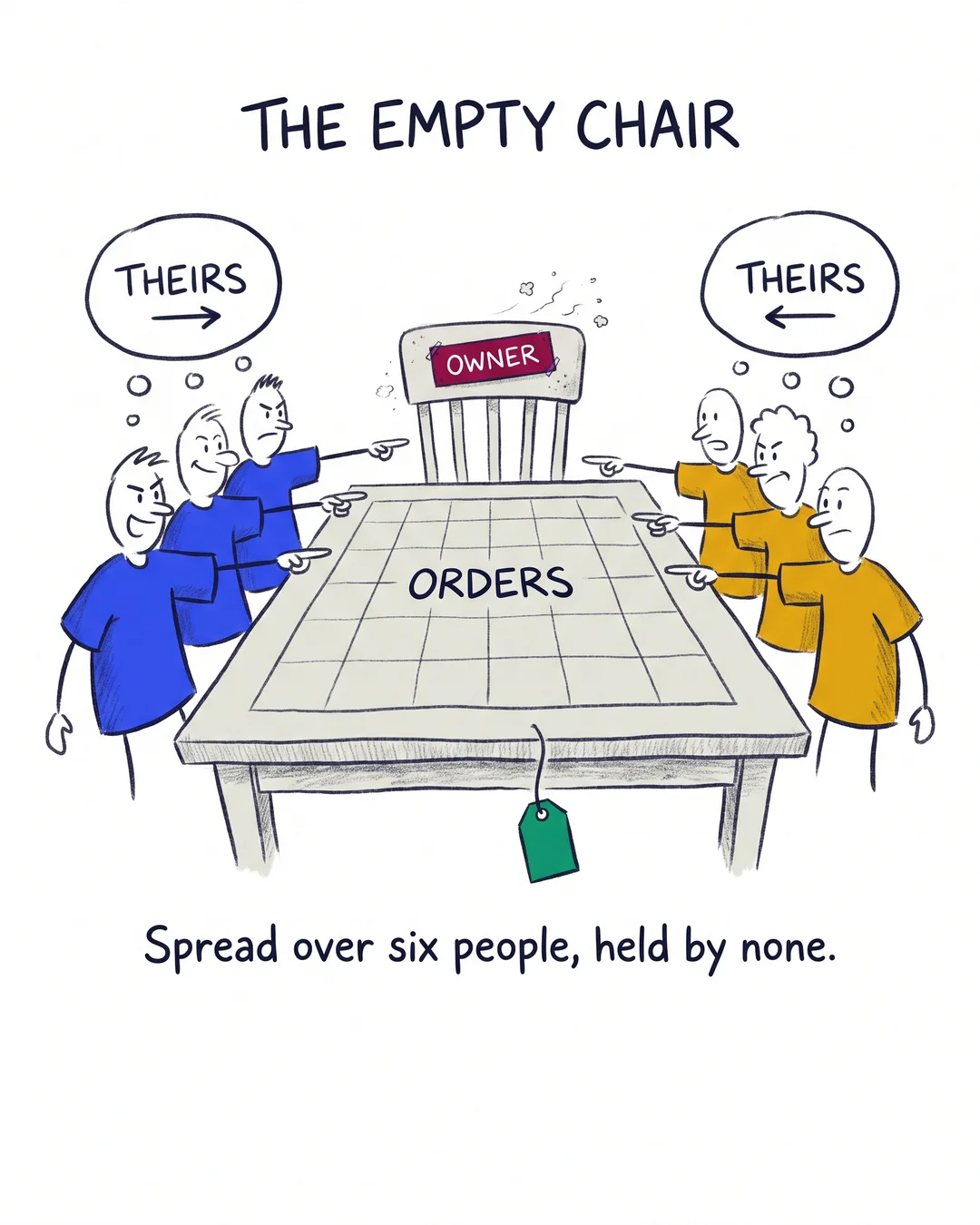
Nobody owned the orders table. Everyone had opinions about it in the incident channel.
Ownership vacuums form in 3 predictable ways, and I find at least one in most platform reviews:
- The asset outlives its creator. The engineer who built the table left; the table stayed. Ownership was a person, never a role, so it left with them.
- The reorg splits the parents. A team divides in two, and the shared assets land in the gap. Both new teams are sure it isn’t theirs. Both are right, which is the problem.
- The collective umbrella. “The data team owns quality” sounds like coverage and works like a vacuum: accountability spread over 6 people lands on none of them.
The vacuum is quiet until an incident asks “who fixes this?” and the answer takes a meeting. By then it’s political, because claiming ownership now means claiming the blame.
The boring prevention, which mostly holds: ownership assigned at creation, recorded next to the asset itself (a meta field, a YAML line, anything queryable), owner is a role not a person, and every reorg ends with a pass over shared assets before anyone announces the new chart.
Name the owner of your most-queried table. Did you have to think about it?
Fractional Data Architect helping startups and scaleups build data platforms that scale.
More about Thomas Nys →