Observability Turned Our Senior Engineers Back Into Builders
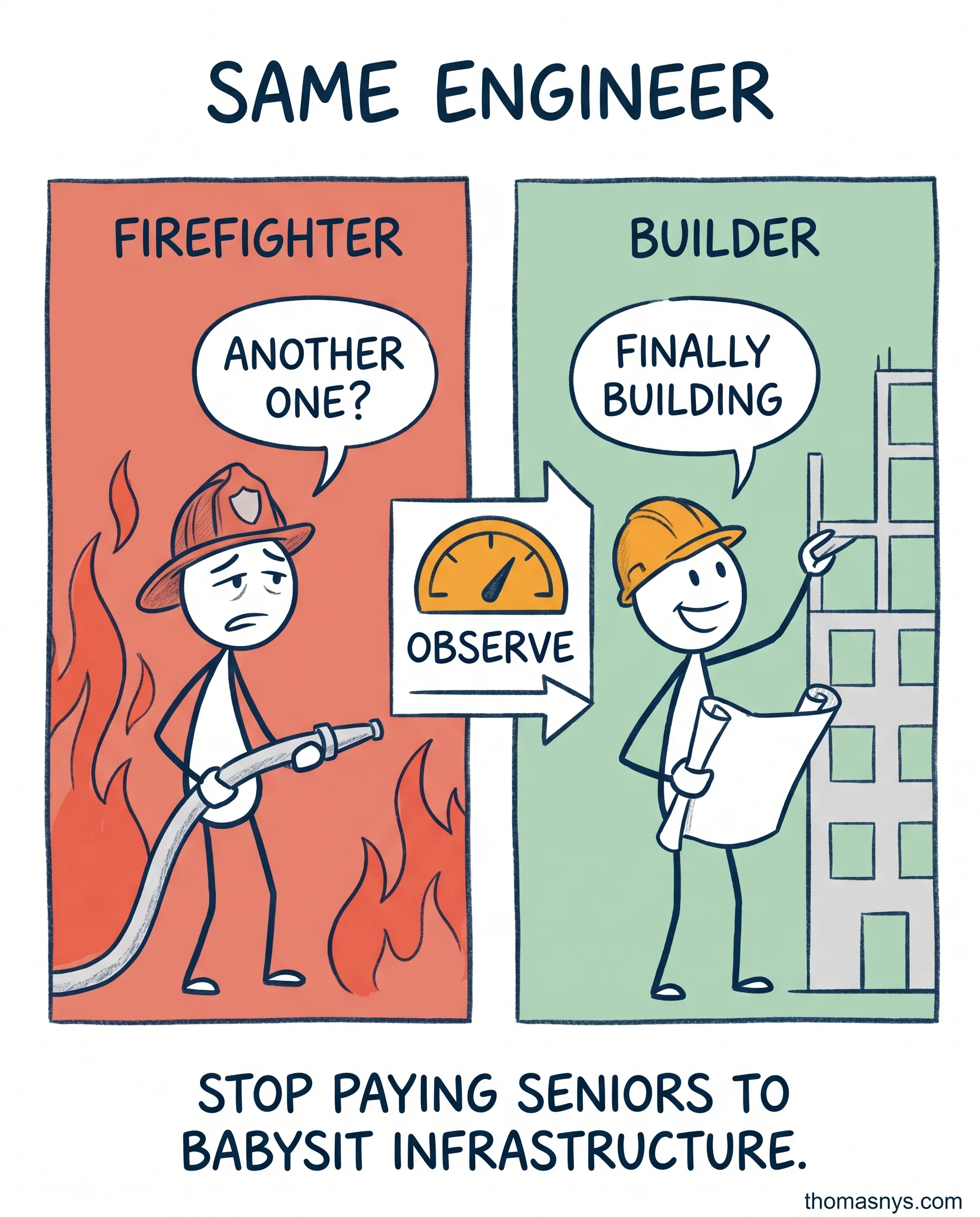
Six months ago our senior engineers were firefighters. Now they’re builders again. The change wasn’t a reorg. It was observability.
Before: 12 incidents a month, 8 hours each, three senior engineers stuck in the loop. That’s 96 hours of firefighting every month - the kind of work nobody hired them to do.
After observability rolled out, the team changed. They stopped reacting. They started building. The same engineers who’d been patching pipelines at 11pm were suddenly proposing schema improvements, writing reusable test patterns, mentoring juniors. They had time. More importantly, they had headspace.
When you’re constantly firefighting, you can’t think strategically. You’re just trying to make the alerts stop. Observability gave them back the cognitive room to do the work they were actually hired for.
The CTO saw the difference in week three - not in metrics, but in the kind of pull requests showing up. One engineer told me it was the first quarter in two years they’d built something they were proud of, instead of just keeping the lights on.
If your senior engineers are firefighting, you’re not paying them for their seniority. You’re paying them to babysit infrastructure.
What would your senior engineers build if they weren’t constantly putting out fires?
Fractional Data Architect helping startups and scaleups build data platforms that scale.
More about Thomas Nys →