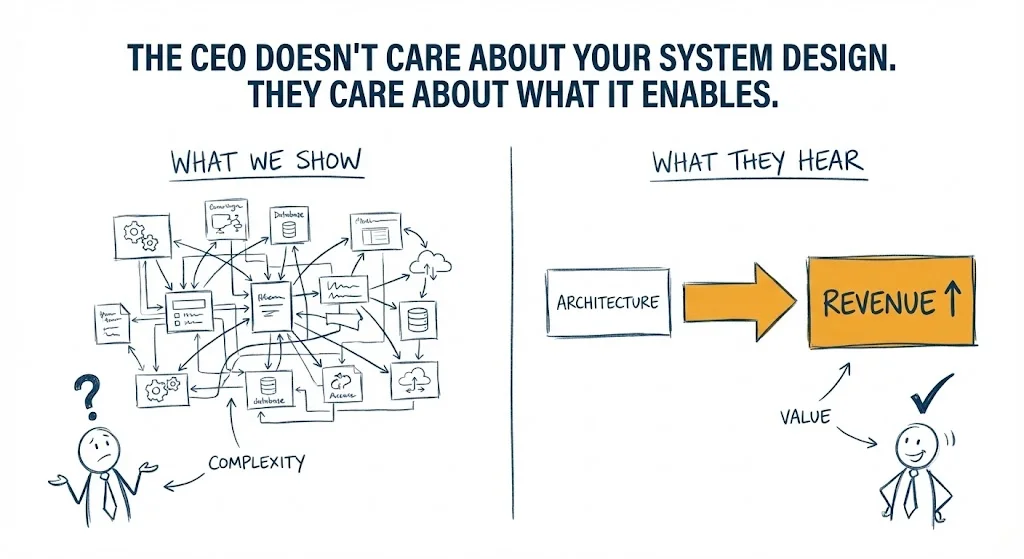
The CEO doesn’t care about your system design. They care about what it enables.
Architects who speak the language of technology are invited to implementation meetings. Architects who speak about outcomes get invited to strategy meetings.
The difference isn’t technical skill. It’s translation.
“We need to refactor the monolith” is a technical statement. “We can’t launch in new markets until we fix our platform” is a business statement. Same problem. Different audience. Different response.
Most architecture conversations happen too late - after strategy is set, when technical constraints surface as blockers. By then, you’re negotiating scope cuts, not shaping direction.
The architects with strategic influence don’t wait to be asked. They connect their work to what leadership already cares about: time-to-market, cost per transaction, regulatory exposure, and customer retention.
“We modernized the data platform” gets a nod. “Customer onboarding dropped from 3 days to 3 hours” gets attention.
Technical excellence matters. But technical excellence that leadership can’t see is technical excellence that gets cut when budgets tighten.
The question isn’t whether your architecture is good. It’s whether you can explain why it matters in terms that your CEO already tracks.
When did you last present architecture in terms of business impact, not technical capability?