Leadership Bottleneck In Stacks
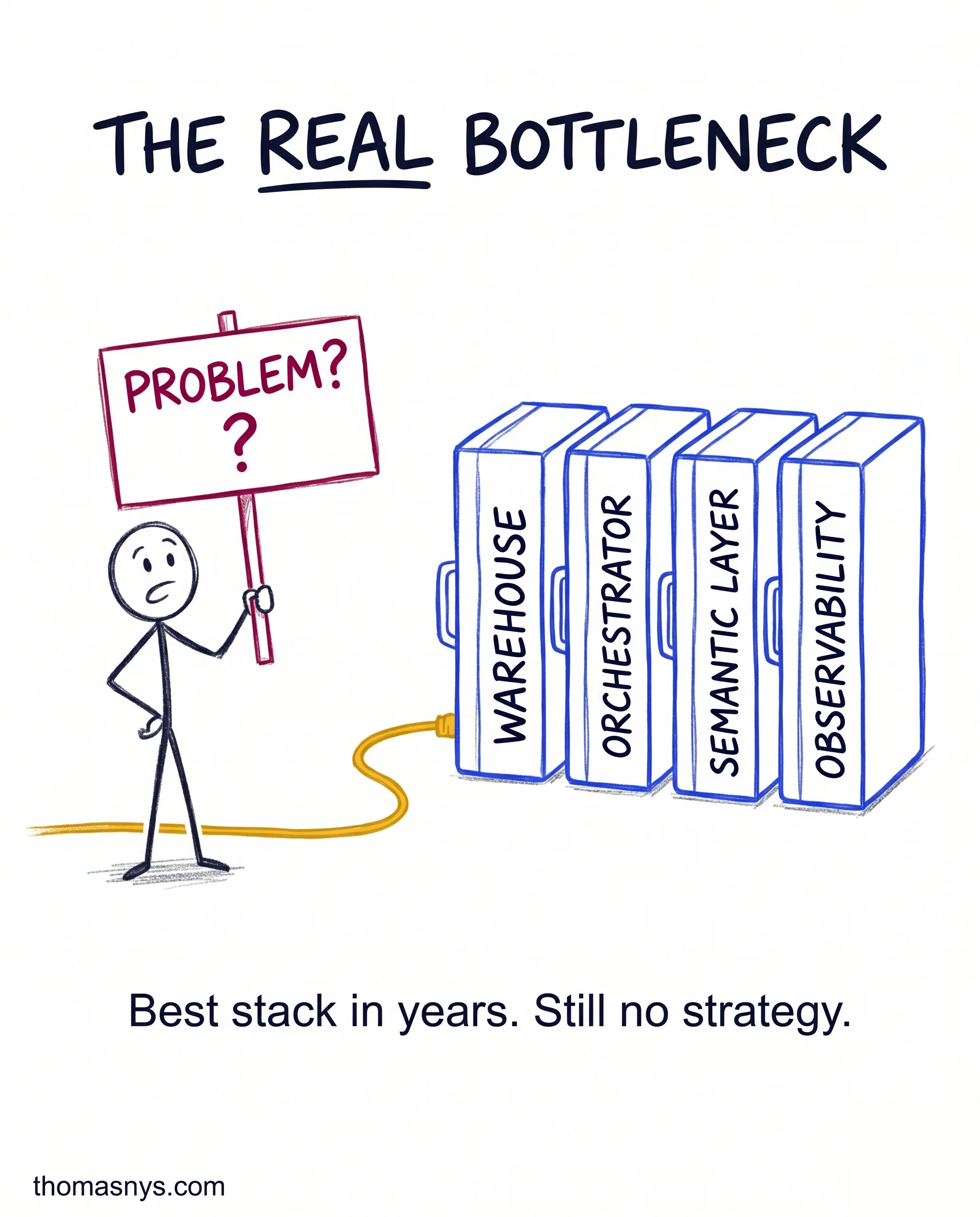
The 2026 data tooling is the best it’s ever been. The bottleneck in most teams I see is still a leader who can’t say, in two sentences, what problem they’re solving.
I see it every quarter. A team buys the warehouse, the orchestrator, the semantic layer, the observability tool. Six months later the dashboards are still wrong and the plan is still a backlog of requests with no strategy behind it.
The tools were never the gap. When someone leads with “we need to migrate to X” before they can name the business problem, my alarm goes off. That’s the tell that a tool is being bought to avoid a harder conversation.
The harder conversation is three questions, and none of them are technical:
- What decision are we trying to make better, and who makes it?
- What’s good enough? Daily data? 95% accuracy? Define it before building for more.
- Who owns this when it breaks, before it breaks?
A team that can answer those picks tools quickly, because the requirements fall out of the answers. A team that can’t will buy the best tool on the market and still produce a mess, because the mess was never in the tooling.
I’m not anti-tool. Tools matter, and the good ones earn their keep. But a new platform on top of an undefined problem just gives you a faster, more expensive way to be unsure.
Can your team name, in two sentences, the business problem your data stack is solving?
Fractional Data Architect helping startups and scaleups build data platforms that scale.
More about Thomas Nys →