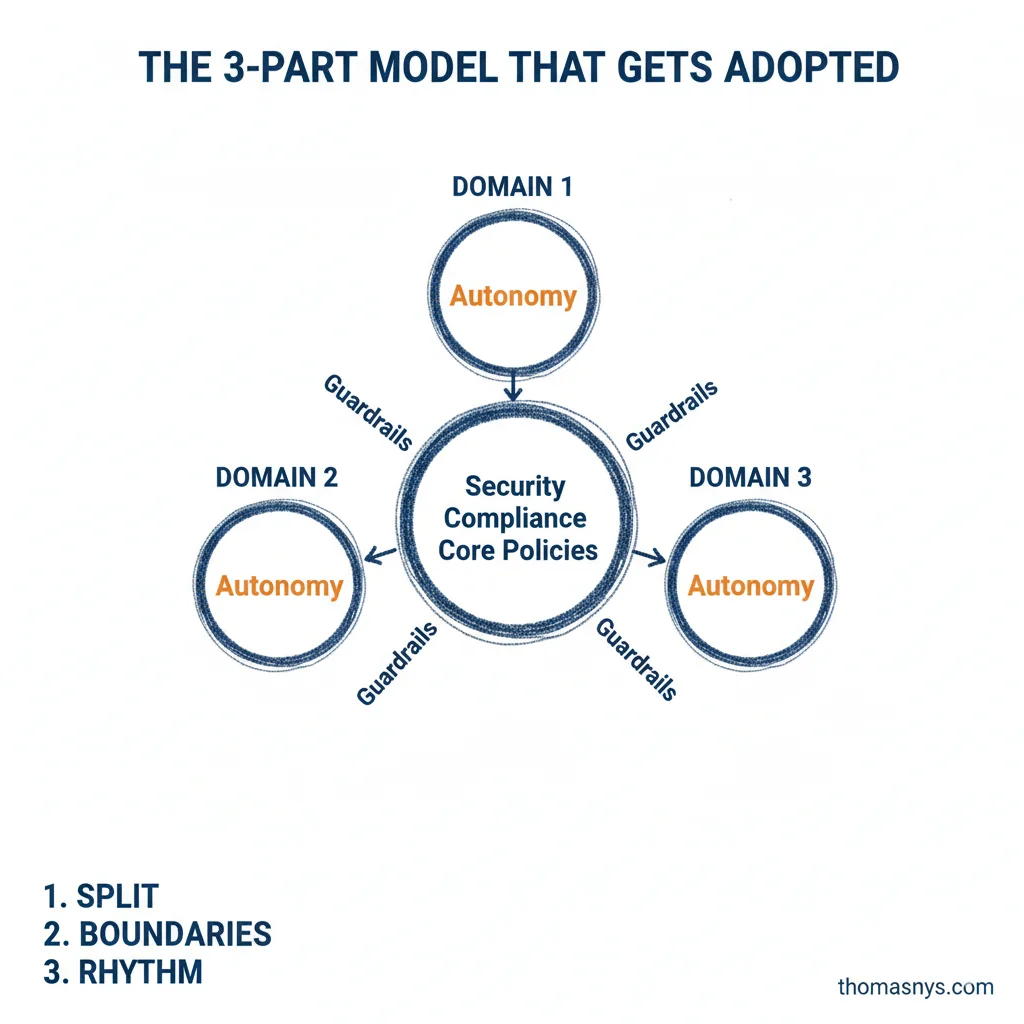
The 3-part governance model that actually gets adopted.
Yesterday I talked about why rigid governance fails. Today: an operating model that works.
Part 1: Define the split. What breaks the company if it goes wrong? That’s central. Security, compliance, customer PII - non-negotiable guardrails. Everything else? Domain authority.
Part 2: Make boundaries explicit. Create a decision matrix. Three columns: “Central approval required,” “Domain decides, central informed,” “Domain decides, no notification.” Every governance question maps to one column. No ambiguity.
Part 3: Build the operating rhythm. Weekly cross-functional working group. Not to approve requests - to resolve boundary disputes and update the matrix. Governance that doesn’t meet regularly becomes governance that gets ignored.
The goal isn’t less governance. It’s governance in the right places.
How many decisions are stuck in your central review queue right now?