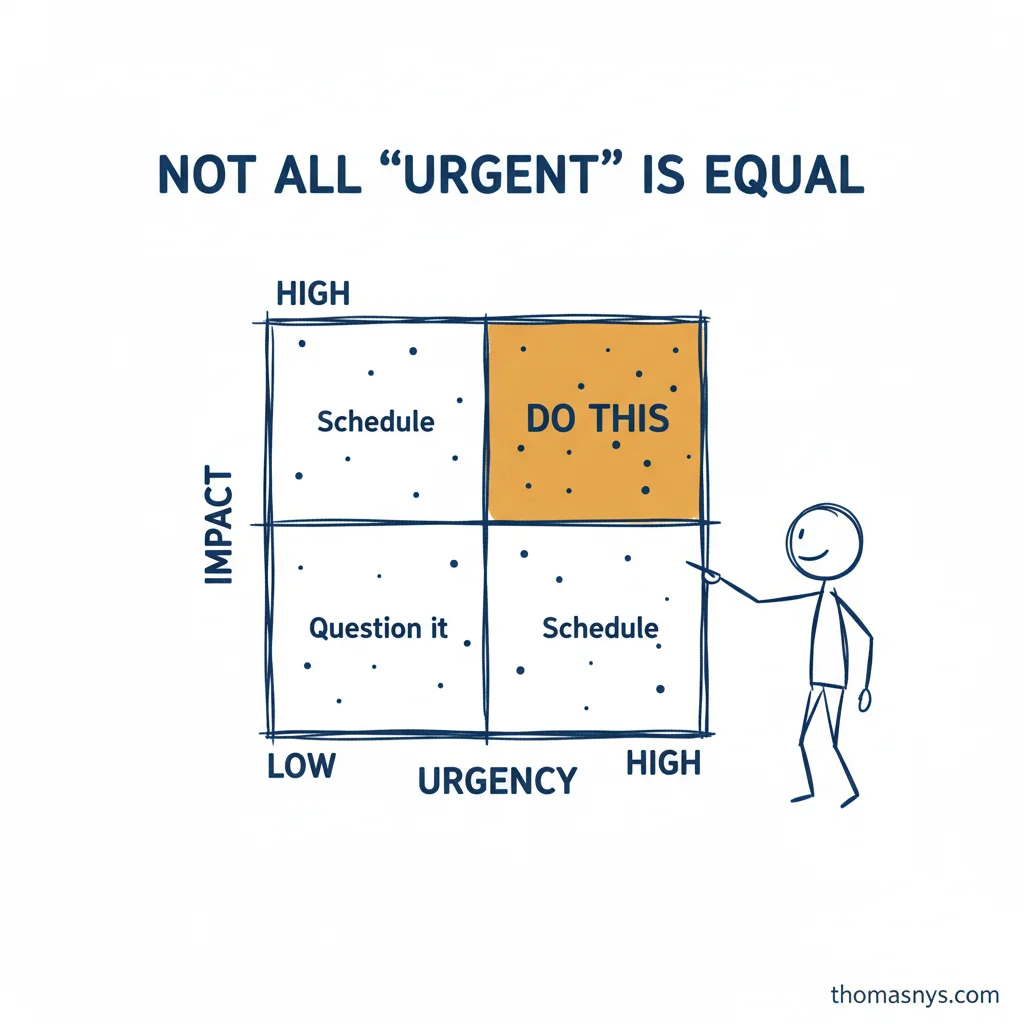
When everything is “high priority,” nothing gets done. Here’s how to fix your data request backlog in three steps.
Last month a Head of Data showed me their backlog. 23 requests, all urgent. His team was paralyzed - they’d stopped making any decisions at all.
Here’s what we did:
Step 1: Break “priority” into components.
Urgency isn’t importance. A request can be urgent (deadline tomorrow) but low impact (saves one person 10 minutes). Score both separately. I use a simple 1-3 scale for each.
Step 2: Add cost of delay.
What happens if we don’t do this for two weeks? Some requests have real cost - a contract waiting, a decision blocked. Others… nothing happens. Make stakeholders quantify the wait.
Step 3: Make it visible.
Put the scored backlog where everyone can see it. When stakeholders see their “urgent” request ranked below three others, they either accept it or make a better case.
The magic isn’t in the framework. It’s in forcing the conversation. “Everything is urgent” is a symptom of stakeholders who’ve never had to choose.
Actually, scratch that - the magic is in giving your team permission to say no with data.
Priority without criteria is just noise.
How does your team handle the “everything is urgent” problem? I’m collecting approaches that actually work.