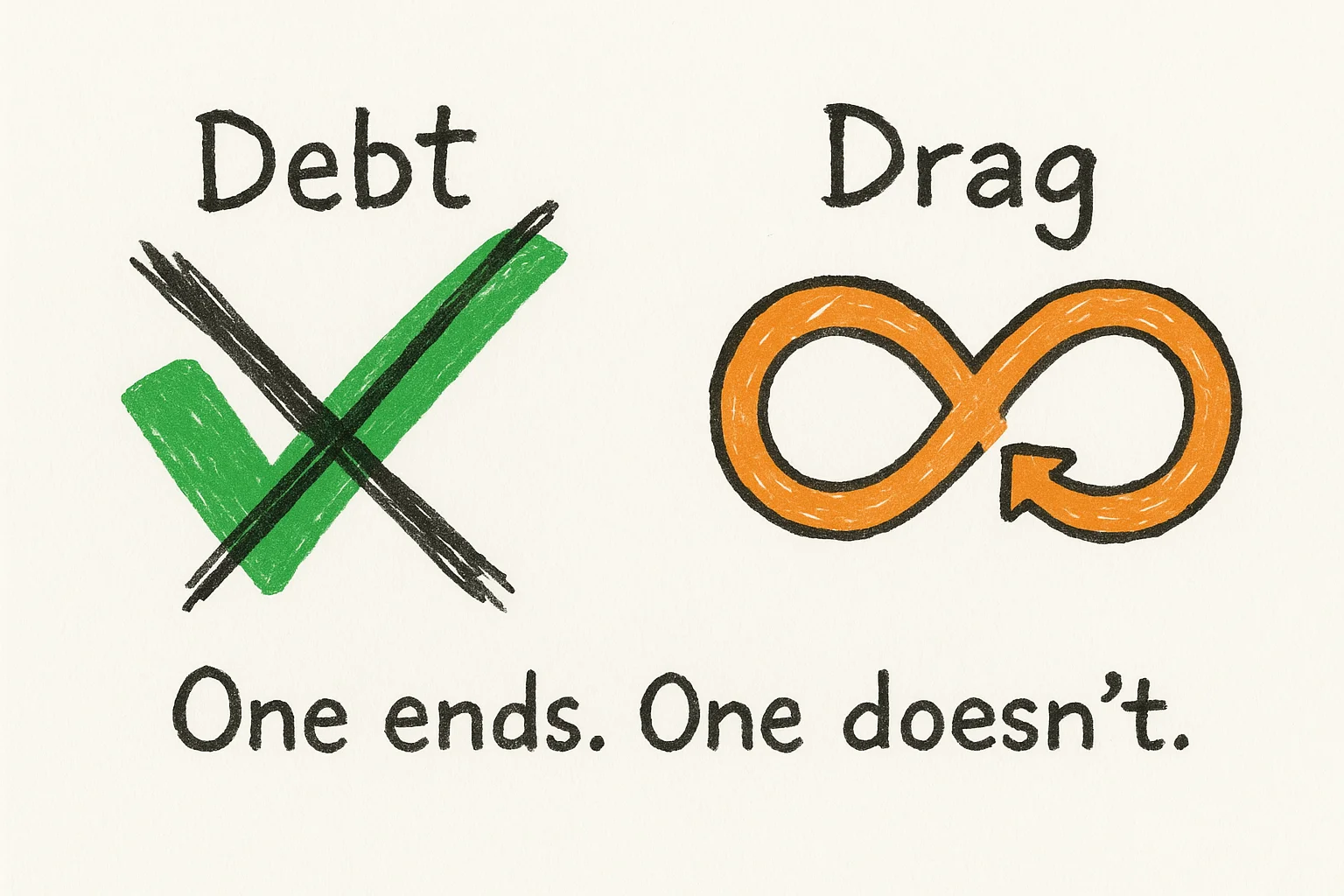
Stop calling it technical debt. Debt has a balance you can clear. This is permanent friction.
Drag is a force, not a balance. It acts on everything you do, every day. Here’s the problem with calling it debt:
Debt has a clear balance. You know exactly what you owe. You can schedule repayments. One day, you’re done.
Technical drag doesn’t work that way.
Every feature takes longer. Every bug is harder to trace. Every new hire takes longer to become productive. And unlike debt, you can never fully eliminate it-you can only reduce it.
This isn’t pedantry. The metaphor shapes how organizations respond.
“Debt” suggests a one-time payoff: “Let’s do a refactoring sprint.” Leaders expect closure that will never come.
“Drag” suggests continuous investment: “How do we reduce friction systematically?” Leaders plan for ongoing improvement.
The CFO understands debt. They’ll ask when you’ll pay it off.
But if you explain drag-a permanent force that slows all future delivery by 20%-suddenly the investment case changes. If drag makes every initiative 20% slower, a 12-month roadmap quietly becomes 15 months. That gap is where competitors pass you. You’re not paying off a balance. You’re reducing resistance.
How would your planning change if you stopped promising to “pay off debt”?