Fractional For Stack Survival
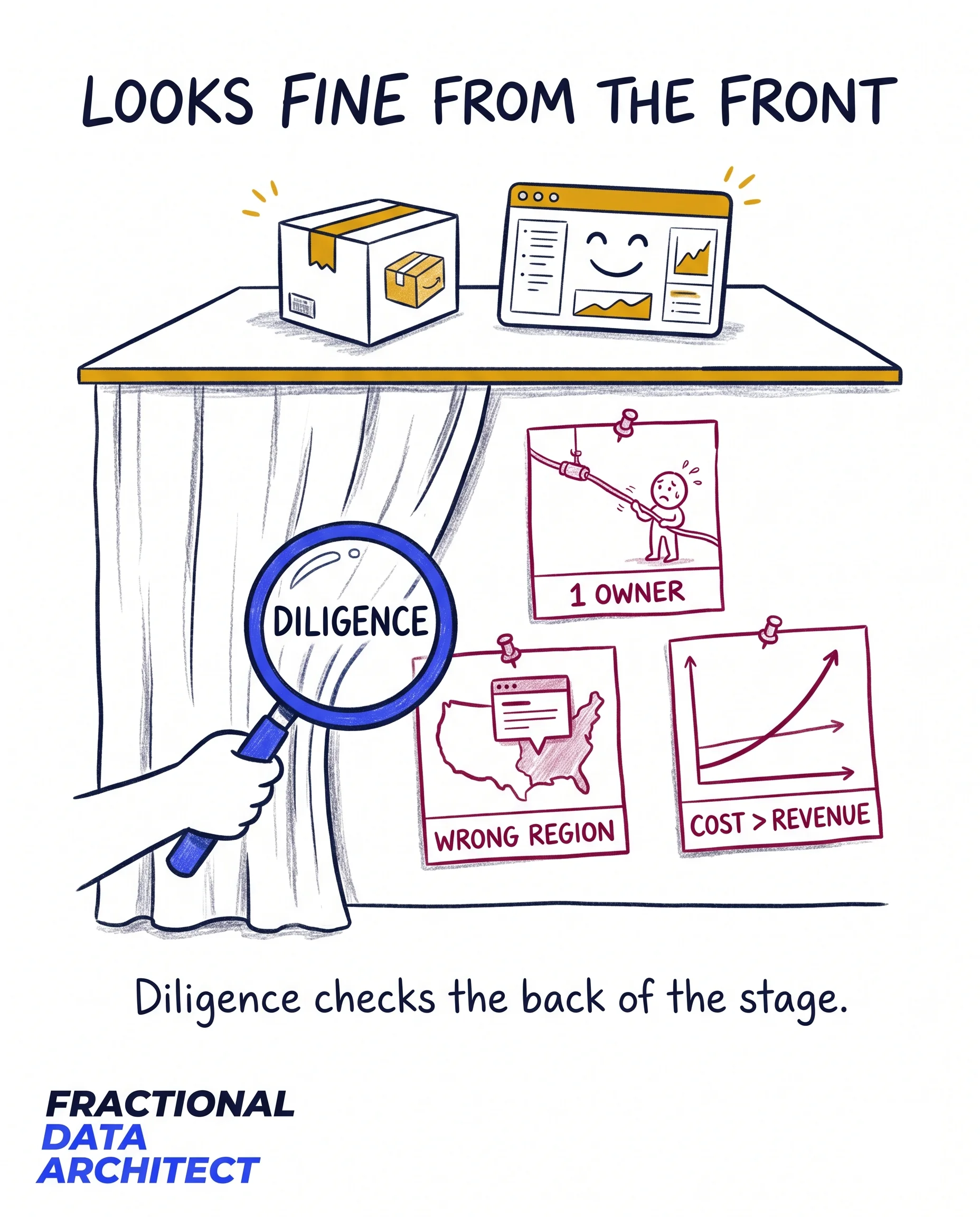
A fintech founder asked me to sanity-check their data stack three weeks before a raise. It wouldn’t have survived the investor’s technical due diligence.
The platform worked. Dashboards loaded, pipelines ran, the product shipped. From the inside it looked healthy, which is exactly why nobody was worried.
Two days of digging turned up three things that would come up in diligence:
- A single undocumented pipeline fed every financial report. One person understood it. They were interviewing elsewhere.
- Customer data sat in a region that didn’t match what their own privacy policy promised. For a fintech raising in the EU, an advisor treats that as a finding.
- Cloud cost scaled faster than revenue. Easy to model, easy for an investor’s advisor to flag as a future margin problem.
None of these were visible from the product. All three were the kind of thing a sharp technical advisor finds in an afternoon and uses to chip the valuation or slow the round.
We spent the three weeks on the two that mattered most. Documented and de-risked the financial pipeline, with a second engineer who could run it. Moved the data to the right region and made the policy true. The cost trajectory we couldn’t fix in three weeks, so we did the next best thing: a one-page plan showing we understood it and where it was going, which is what the advisor actually wanted to see.
The round closed. The diligence questions came up almost word for word. They had answers.
The lesson I keep relearning: a stack that runs fine day to day can still fail the one review that decides whether you raise. Those are different tests, and the second only happens when the stakes are highest.
What’s the one part of your stack that works fine today but only one person actually understands?
Fractional Data Architect helping startups and scaleups build data platforms that scale.
More about Thomas Nys →