Fractional Architect Series B Audit
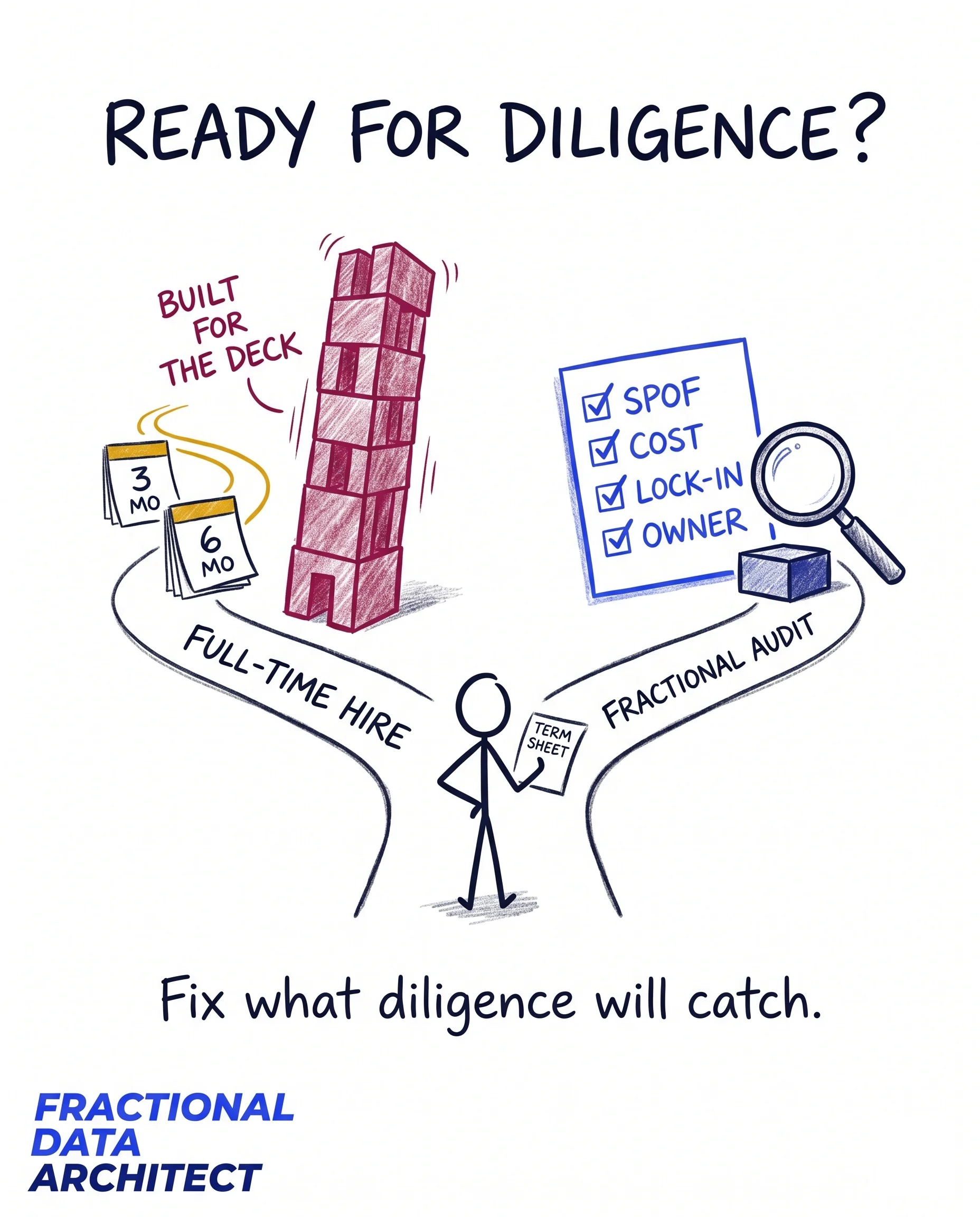
Investor technical due diligence has one real question: will this stack survive the growth the round is funding?
When a raise gets close, two instincts show up. Hire a full-time architect, or keep shipping and hope diligence goes fine.
The full-time hire is a three-month search you don’t have time for, followed by a six-month ramp. The incentive runs the wrong way too: a new architect with a permanent seat tends to build for the scale on the pitch deck, not the scale you have today. You raise to grow into a platform you can’t yet staff.
A focused audit asks a narrower question. Given where you are and the round you’re raising, what breaks first, and what would an investor’s technical advisor flag?
What a pre-Series B audit actually checks:
- Single points of failure. The one pipeline, the one person, the one undocumented job month-end depends on.
- Cost trajectory. Does the bill scale with growth, or faster than it? Investors model this.
- Migration optionality. How locked in are you, and what does leaving cost.
- Ownership. Who’s accountable when each system breaks, by name.
The output is a short list you can defend in the room: what to fix before diligence, and what to defer with a dated plan.
You’ll still hire the full-time architect. After the round, when you know the scale you’re actually building for, and you can describe the role in one sentence.
If an investor’s technical advisor opened your stack next week, what’s the first thing they’d flag?
Fractional Data Architect helping startups and scaleups build data platforms that scale.
More about Thomas Nys →