FinOps Isn't a Dashboard. It's Architecture.
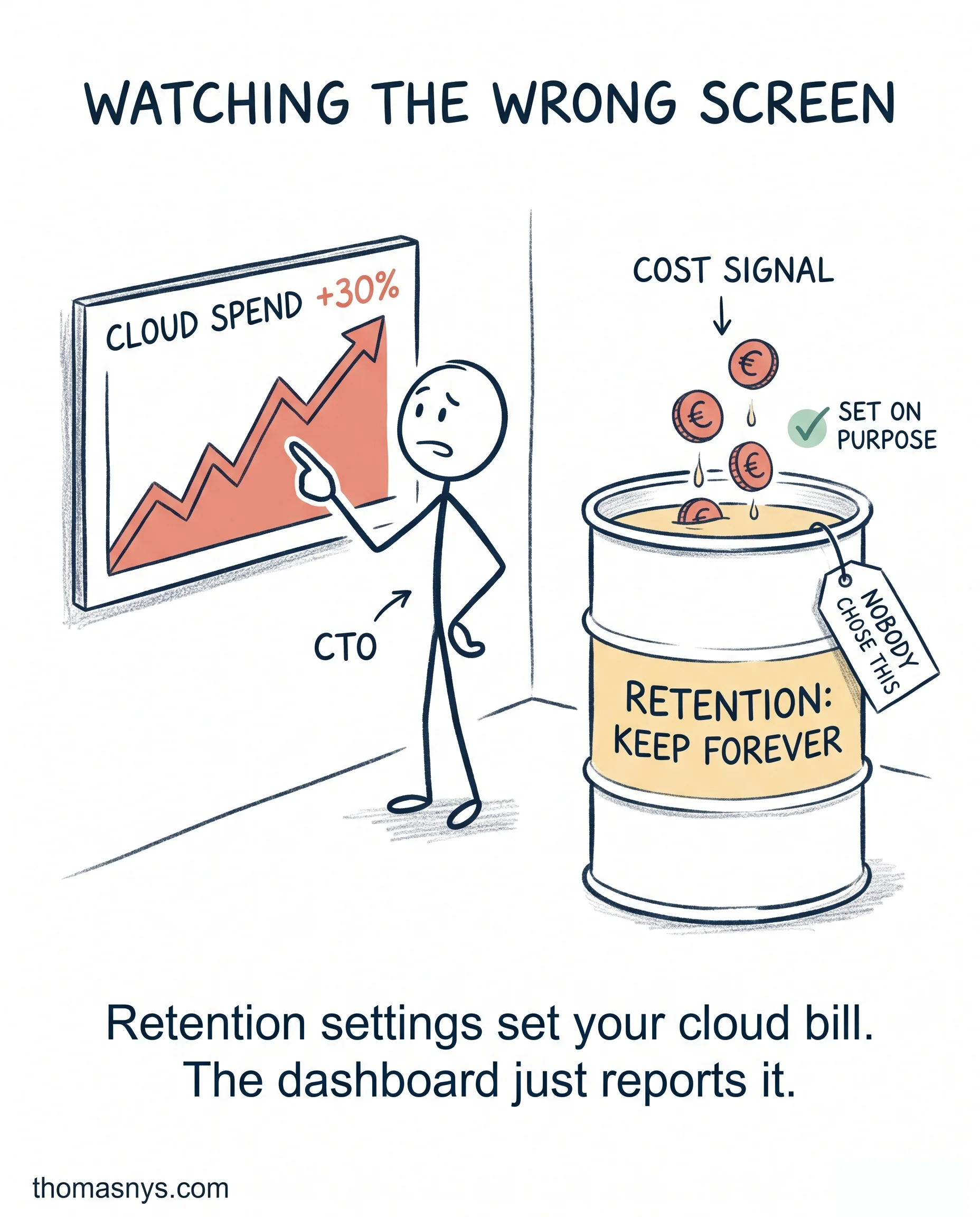
Nobody chose to keep 7 years of event logs. The default did. You’ve paid for it every month since.
The CTO opens the FinOps dashboard. Spend is up again. The dashboard shows where the money went: storage, egress, a warehouse running around the clock. It doesn’t show why, because the why is a decision nobody remembers making.
Three defaults drive most of the cloud bill I see at SMEs:
- Retention. Logs, events, and raw tables set to “keep forever” because that was the default when the pipeline shipped. Nobody picked it. Nobody owns it.
- Storage tier. Everything sits in hot storage, queried rarely or never. Cheaper tiers exist, but the data never moved because moving it was nobody’s job.
- Copies. The same dataset replicated across three environments, two of them stale, all three billed.
A dashboard reports this after the money is spent. It can’t change the number it’s showing you.
What lowers the bill sits upstream, in architecture:
- Set retention on purpose. “Raw events: 90 days. Aggregates: 3 years.” Write it down. Give it an owner.
- Tier by access, not by habit. A table queried once a month doesn’t belong in hot storage.
- Kill the copies you can’t name. If nobody can say why a dataset is replicated, it probably shouldn’t be.
I watched a storage review cut a Belgian SME’s warehouse bill without changing a line of pipeline code. The avoidable spend was sitting in retention settings nobody had touched since the platform went live.
The dashboard is where cloud cost shows up. It gets set much earlier: in what you keep, how fresh it has to be, and how many times you copy it. Fix that and the dashboard mostly takes care of itself.
When did anyone last set your retention on purpose?
Fractional Data Architect helping startups and scaleups build data platforms that scale.
More about Thomas Nys →