Everyone says "people, process, technology." Then they start by picking Snowflak
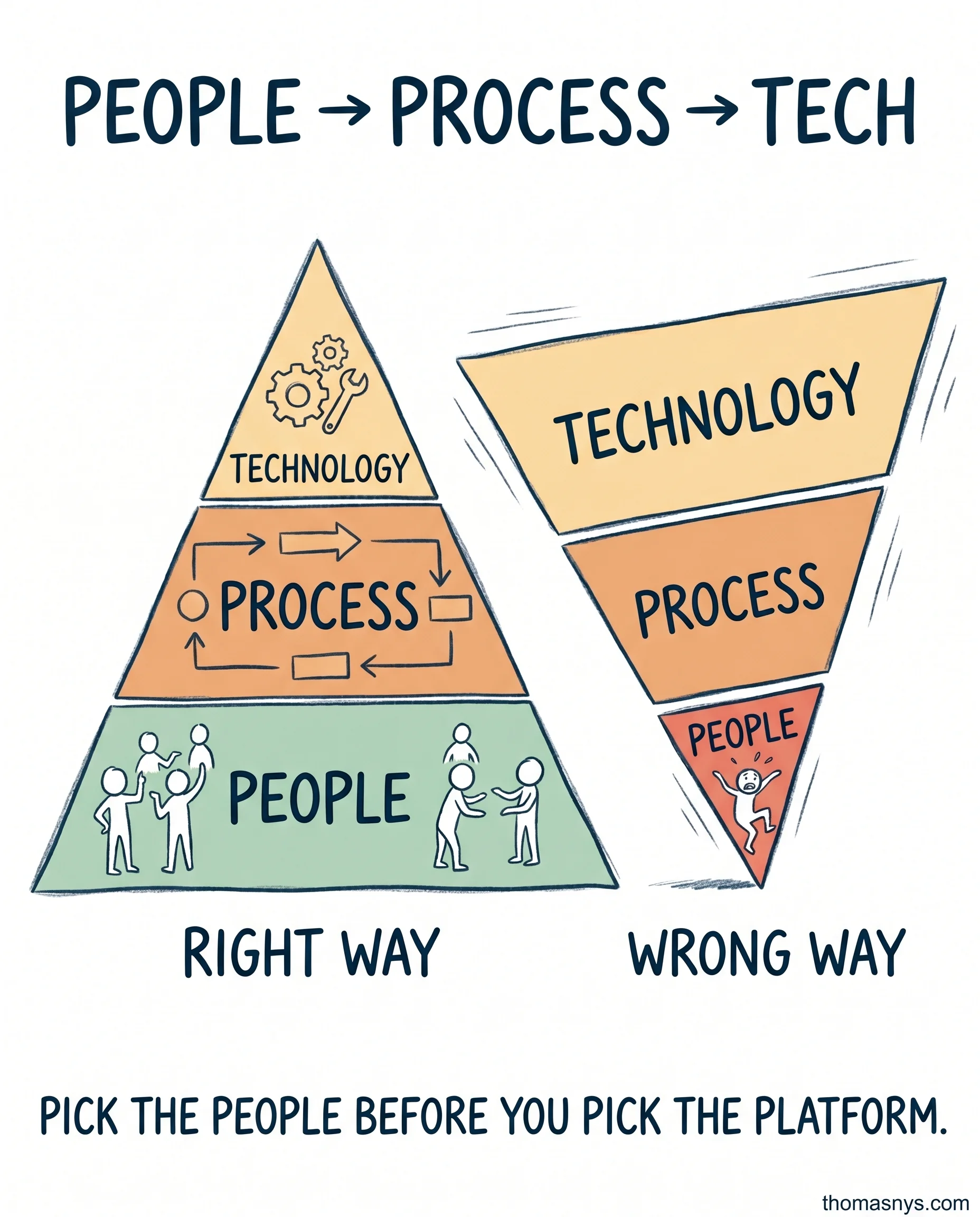
Everyone says “people, process, technology.” Then they start by picking Snowflake.
Almost every data strategy I see starts the wrong way: a tool choice, then a process built around the tool, then people hired to operate the tool. Then six months later somebody asks why nobody’s adopting it.
The right order is people, then process, then technology.
People first. Do you have the right roles? Data engineer, analytics engineer, analyst, platform engineer - these are different jobs. Hiring “a data person” because the org chart had an open headcount is how you end up with one senior engineer doing four jobs badly.
Process second. Once you have the people, define the workflows. Who owns what. How do requests flow. Who approves architecture decisions. Where does data quality live. This is the unglamorous middle layer everyone wants to skip.
Technology third. Now you pick the stack. The stack supports the process. The process is staffed by the people. If you got the first two right, the technology choice is almost mechanical.
When teams reverse this, here’s what I see: Snowflake gets bought. Then dbt gets bolted on because someone read a blog post. Then Airflow because the dbt jobs need orchestration. Then a catalog because nobody knows what’s where. Then six months in, leadership asks why adoption is flat. Because nobody owned the process. Because the people were hired to fight fires the tool created.
Hidden belief I keep flagging: “the right tool will fix it.” It rarely will. The tool amplifies what’s already there. Good process + right people + Snowflake = good outcomes. Broken process + wrong people + Snowflake = expensive shelfware.
Be honest: did your last data initiative start with a tool choice?
Fractional Data Architect helping startups and scaleups build data platforms that scale.
More about Thomas Nys →