DE Role Evolution 2026
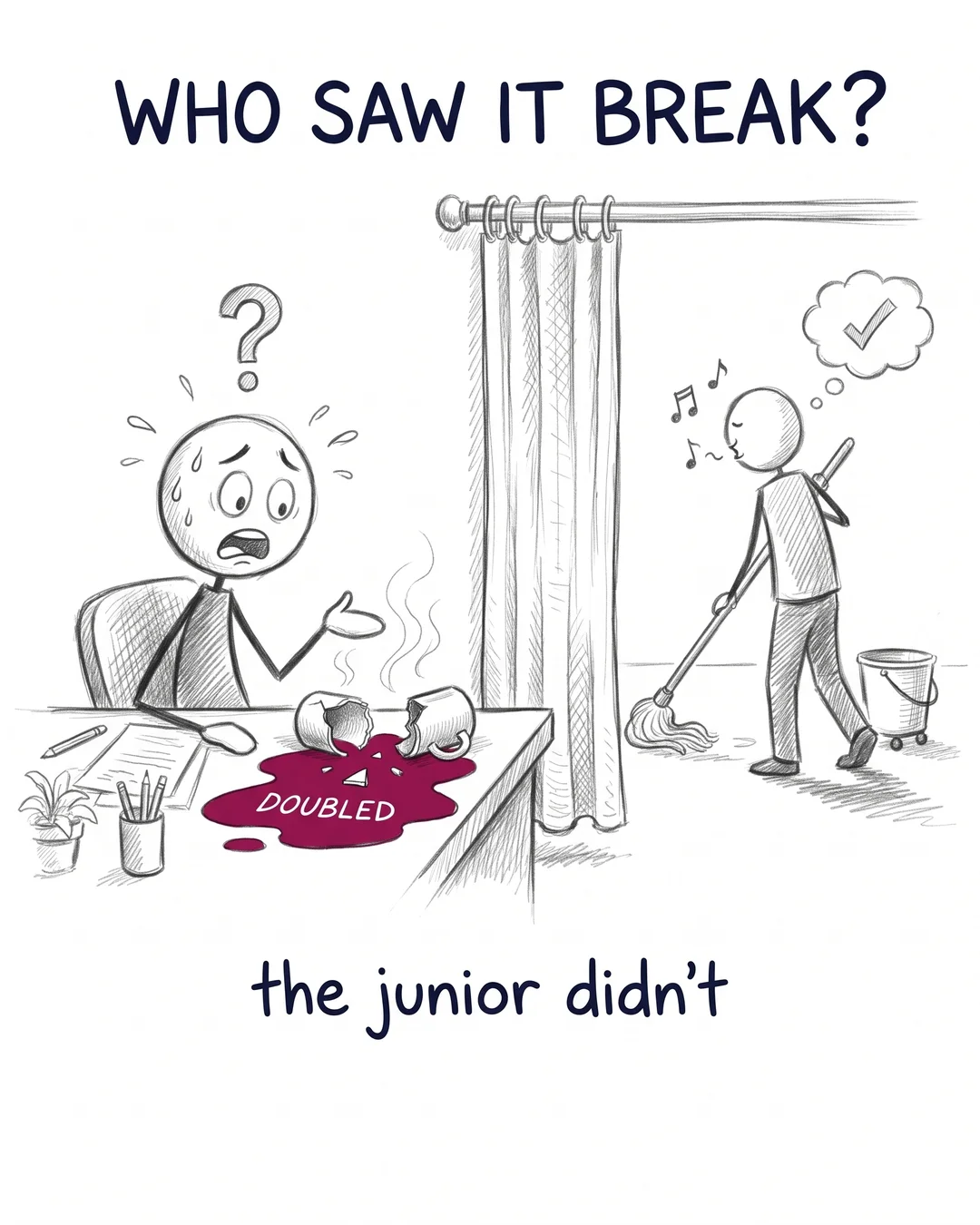
If a model writes the pipelines, I don’t know yet where your juniors learn why pipelines break.
Most seniors I know learned idempotency the expensive way. A load ran twice, a revenue table doubled, and someone spent a weekend fixing it by hand.
Junior data engineers joining teams now get a lot of their first code from an assistant. It runs. It passes review, because the reviewer is busy too. And the first time it double-counts, a senior fixes it quietly and the junior never sees the mess.
Give it two years and you have engineers who can ship the happy path and have never had to recover one. The work is moving toward operations: backfills, late data, knowing what sits downstream. Most of that gets learned during recovery work, which juniors miss when a senior fixes the incident quietly.
I’d put juniors on the incident rota early, paired with a senior, and have them write the postmortem, even for the small ones. If real incidents are rare, break something in staging once a quarter and see who finds it.
I don’t know if that’s enough. I’d start with the rota, because that’s where they see real recovery work.
How is your team teaching failure now that the happy path writes itself? More on how I’d set up a small team: https://thomasnys.com/building-data-teams/
Fractional Data Architect helping startups and scaleups build data platforms that scale.
More about Thomas Nys →