Databases Are Being Redesigned for AI Workloads
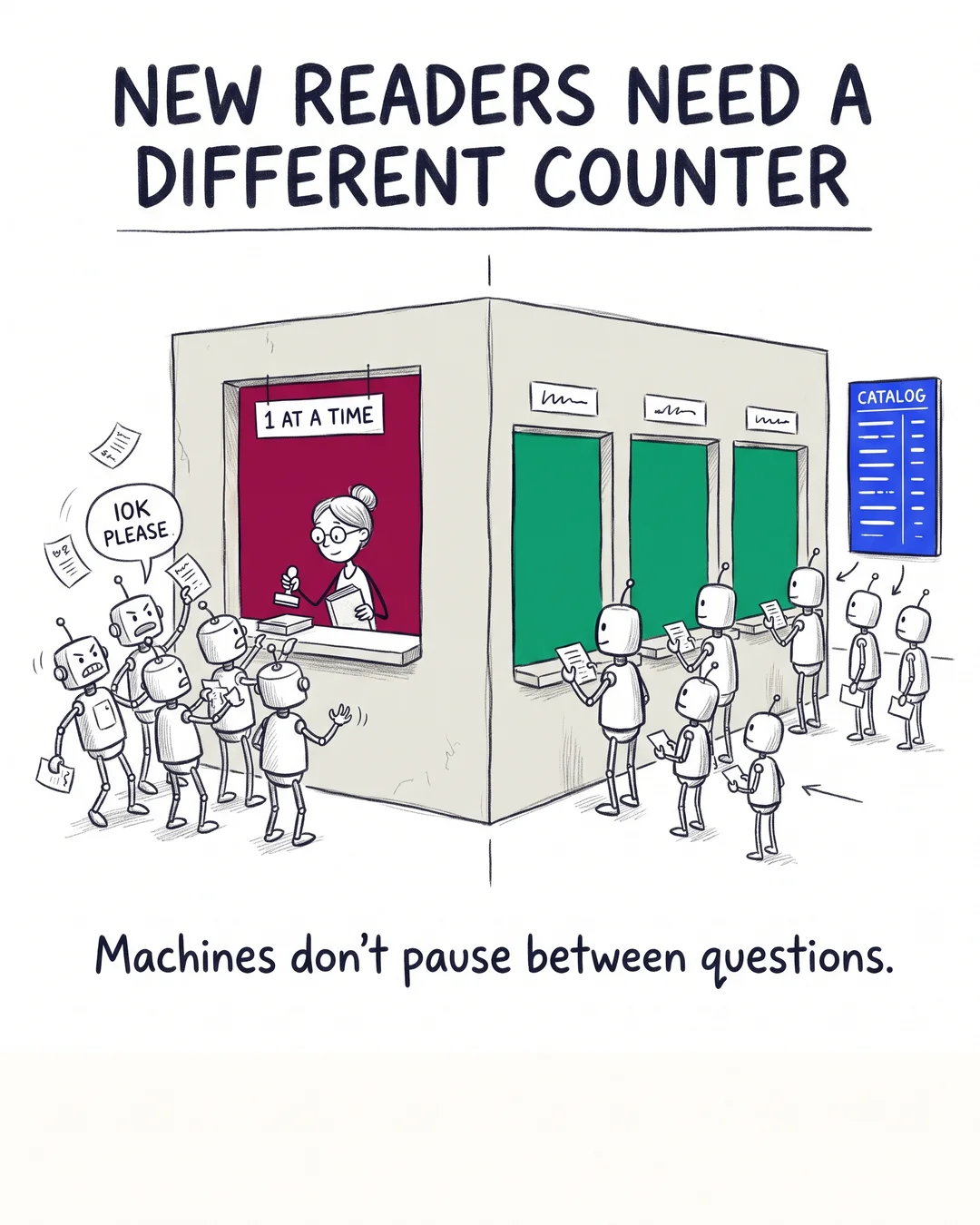
Postgres handled it fine. Until the agent started issuing thousands of embedding lookups a second.
Every assumption underneath a normal database is a human assumption. Queries arrive at human rates, from a known set of applications, with someone available to notice when the answers look wrong.
Agent workloads break all three. That’s what’s driving the current wave of database redesign, and 3 changes matter for anyone choosing a store this year:
- Vector search moving into the general-purpose engines. Postgres with pgvector, and equivalents elsewhere, handle a lot of retrieval without a separate system. A dedicated vector database earns its place at genuine scale or with heavy filtering needs, and rarely before that.
- Separation of storage and compute becoming the norm, so a burst of agent traffic doesn’t compete with your nightly transformations for the same resources.
- Metadata and semantics as first-class citizens. Agents need column meaning, units and caveats readable at query time. Your catalog becomes an interface.
For most SMEs the honest move this year is boring: keep the engine you have, add the vector extension, put the semantics in a catalog. Rewrites earn their cost only when the access pattern proves them necessary.
What in your stack would break first if an agent queried it at machine speed?
Fractional Data Architect helping startups and scaleups build data platforms that scale.
More about Thomas Nys →