Data Reliability Over AI Speed
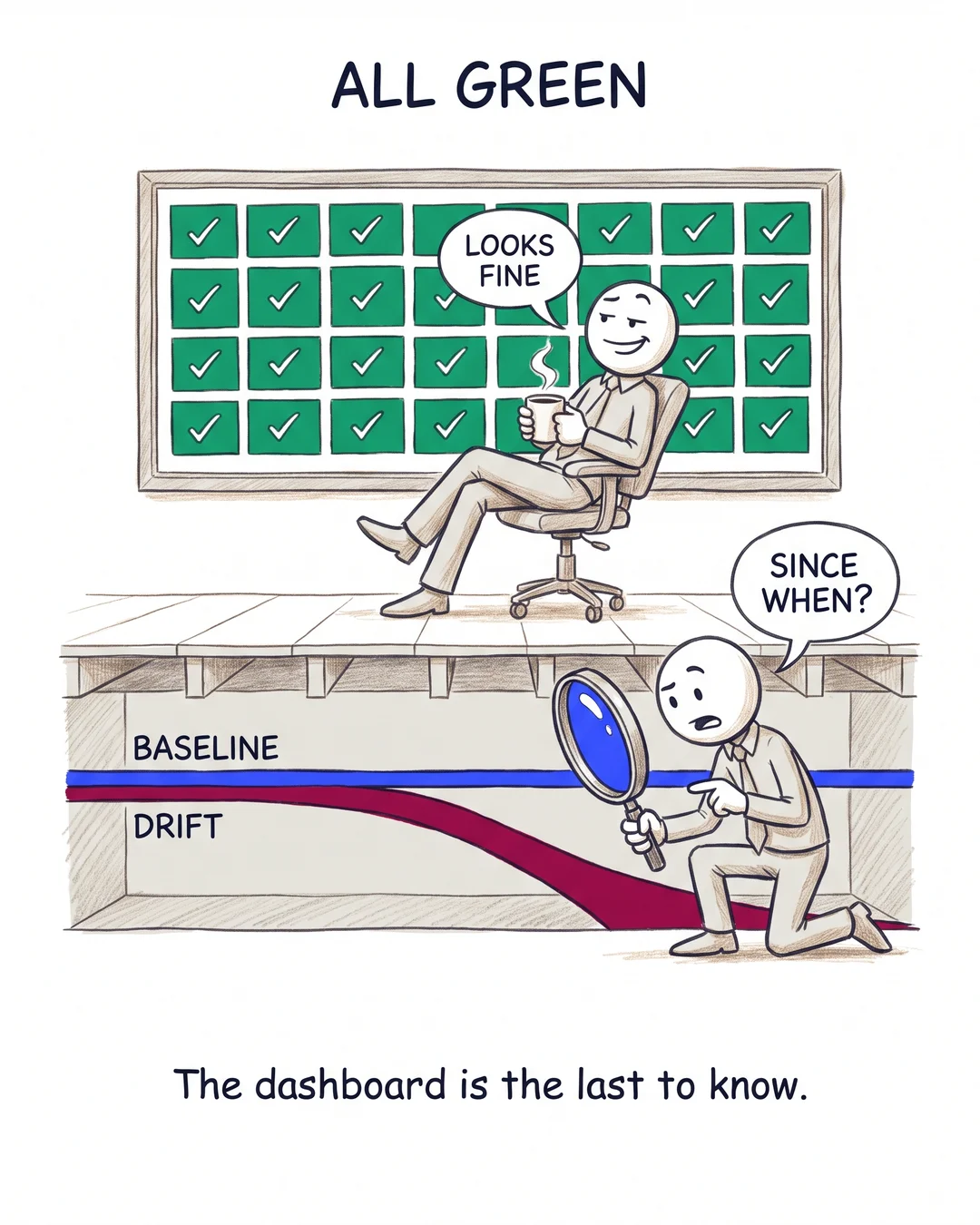
A plain statistical baseline caught model drift before any human would have. It took an afternoon to build.
AI pipelines rarely fail loudly. An upstream schema change, a vendor quietly renaming a field, and predictions keep flowing. They’re just wrong.
On a logistics platform, a plain statistical baseline flagged that a model’s inputs had drifted. No alert had fired anywhere else. We retrained before the bad numbers reached anyone’s decisions. Cost of the check: one afternoon.
Meanwhile, most AI roadmaps I review this year budget for agents first and observability later. Often never.
The sequence that works, in most cases:
- Freshness, volume, and distribution checks on the data feeding the model.
- A baseline, so “worse” is measurable.
- A named owner for the model’s inputs.
Then agents.
An agent built on drifting data automates the wrong answer, faster.
What’s the longest a model in your stack has been quietly wrong before someone noticed?
Fractional Data Architect helping startups and scaleups build data platforms that scale.
More about Thomas Nys →