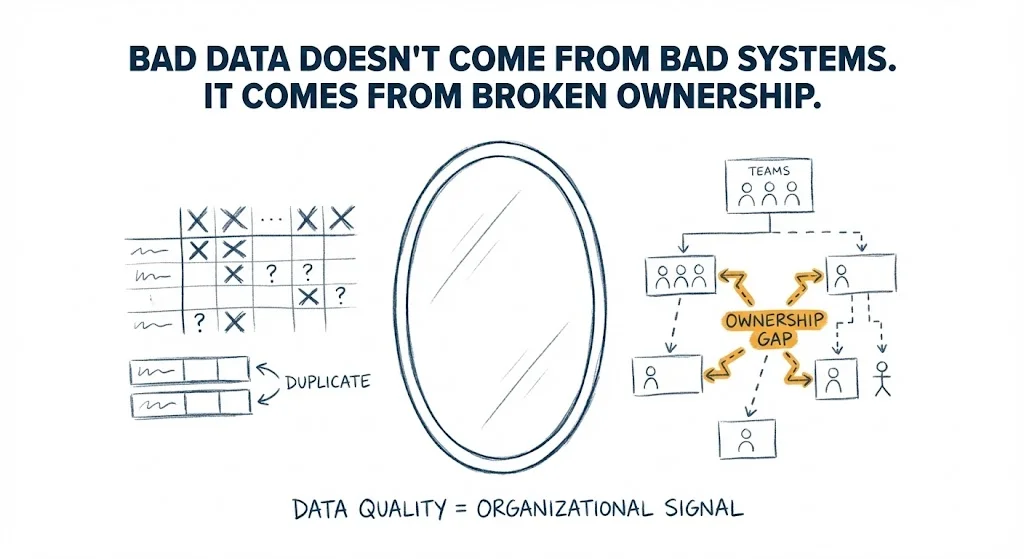
Bad data doesn’t come from bad systems. It comes from broken ownership.
Show me your data quality issues, and I’ll show you your organizational dysfunction.
Duplicate records? Teams that don’t talk to each other. Missing values? Ownership gaps between systems. Inconsistent definitions? Departments that never agreed on what “customer” means. Stale data? Processes that nobody maintains because nobody owns them.
Data quality is a diagnostic tool. It reveals the truth about how your organization actually works, not how the org chart says it should.
The instinct is to fix the data by adding validation rules, building cleansing pipelines, and hiring a data quality team. But you’re just treating symptoms while the core problem continues to spread.
Real data quality improvement begins upstream. Start your quality project with a RACI and definition workshop instead of a tool rollout. It all starts with clear ownership. It begins with agreed-upon definitions before the first row is written. It relies on accountability for what enters the system, not just what exits.
Tools can identify bad data. Only culture can stop it.
The CDO who focuses only on data is fighting the wrong battle. Data quality is an organizational transformation project that happens to involve data.
What does your worst data quality issue reveal about your organization?