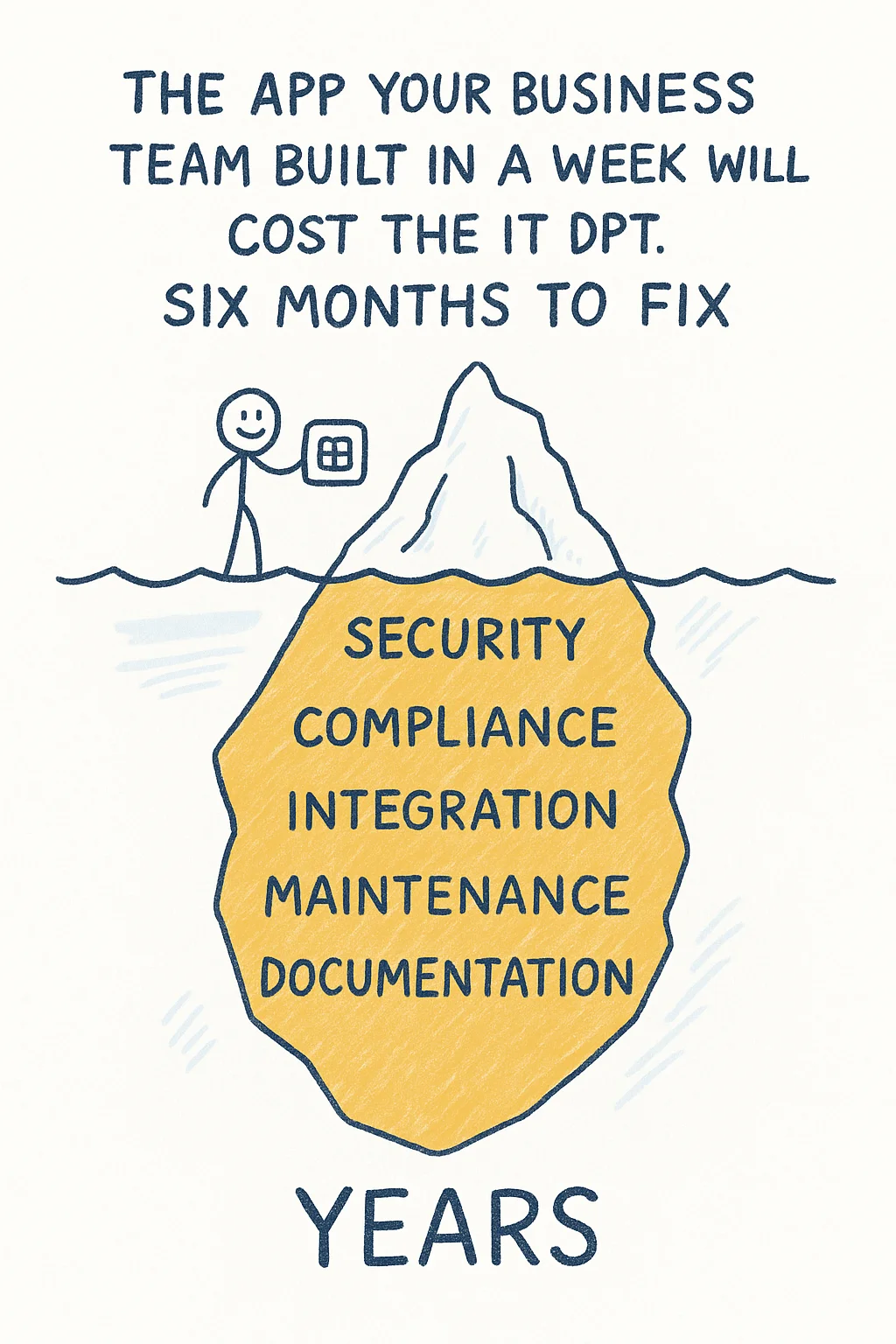
The app your business team built in a week will cost IT six months to fix.
The pitch: business teams develop their own solutions, while IT concentrates on strategic projects. Everyone benefits.
The reality: 42 spreadsheet-based apps, 12 Power Apps nobody maintains, and a compliance audit that nobody can pass because nobody knows where the customer data actually lives.
Citizen development leads to two types of debt. Visible debt: the app that fails when its creator departs. Invisible debt: the business logic now stored outside any system that IT can monitor, secure, or integrate.
The math is asymmetric. Business is built in a week. IT inherits it for years. The person who created the solution has moved on. The context is lost. The documentation never existed.
This isn’t an argument against empowering business teams. It’s an argument for governance that grows with empowerment.
Low-code without guardrails is just shadow IT with a marketing disguise. The risks are the same, just presented differently. Data is scattered across ungoverned apps. Security policies are bypassed because the builder didn’t know they were in place. Integration points are uncharted territory.
The question isn’t whether businesses should build. It’s whether they should make without a clear path to production-grade.
Speed without sustainability is merely debt masked with good intentions.
How many business-built apps in your org are now IT’s problem?