75% Belgian SMEs On AI Daily
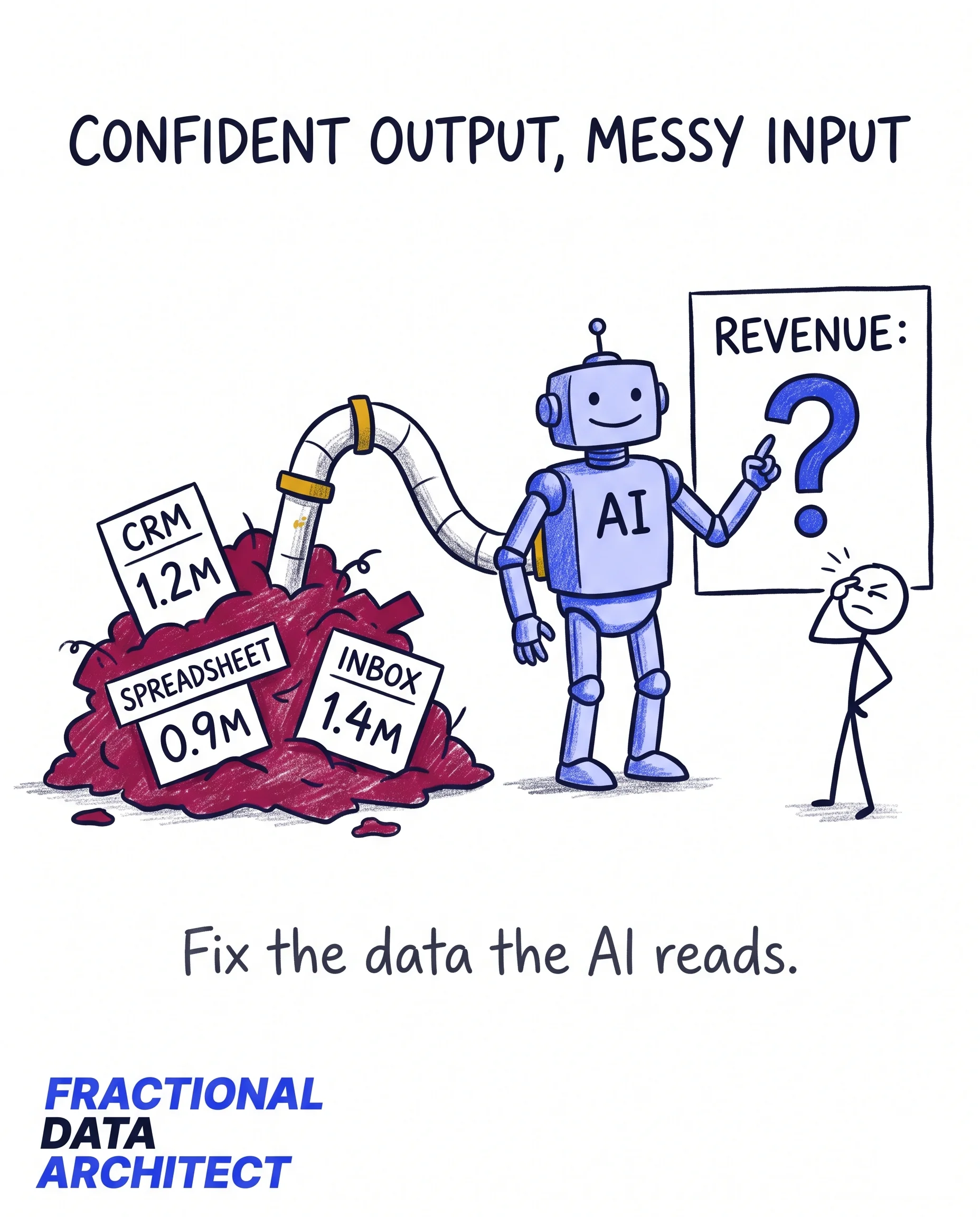
Three in four Belgian SMEs now use AI daily or weekly. Most are running it on data they wouldn’t trust for a board report.
The adoption number is real and it’s rising. Chatbots on the website, copilots in the tools, a model scoring leads or flagging invoices. The market moved fast, and Belgian SMEs are not behind on it.
The data underneath moved slower. The same companies running AI daily often have:
- Customer records spread across a CRM, a spreadsheet, and someone’s inbox.
- No agreed definition of basic terms like “active customer” or “churn.”
- Quality nobody checks until a number looks wrong in a meeting.
None of that gets fixed by adding AI on top. The model reads whatever you point it at and answers with full confidence, clean input or not. Point it at three conflicting definitions of revenue and you get a fluent, wrong answer faster than before.
The fix is cheap and upstream. Spend a little of the AI budget on the data it depends on:
- Pick the few data sets your AI use actually relies on. Usually it’s three or four, not everything.
- Agree the definitions that matter, and write them down where the model and the people both read them.
- Add a basic quality check on those sets before they feed anything automated.
The companies that get real value from AI over the next two years are the ones whose data is trustworthy enough for the AI to be right. Adoption was the easy part.
If you’re running AI in the business already, how much would you trust the data it’s reading right now?
Fractional Data Architect helping startups and scaleups build data platforms that scale.
More about Thomas Nys →